Showing posts with label myths. Show all posts

Monday, January 17, 2022

Letting Go of the Myth of Progress


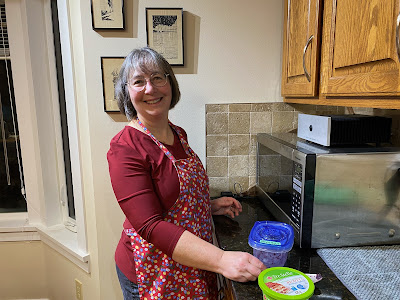
Me in the Kitchen

I was meeting recently with some friends on Zoom. Because of the latest Omicron wave of the pandemic, so much of our social life has gone back to virtual meetings for the time being, and the topic we were discussing was what our goals and dreams for the future were, once this Omicron wave subsides. I thought it was a fitting topic for the beginning of January, when so many of us set goals for the upcoming year.

I used to be one of those people. Although I didn't make New Year's resolutions per se, at the beginning of each year I typically took some time to review the past year's life events and accomplishments, and then wrote up a series of goals for the upcoming year. 

In true Type-A fashion, these were not vague wish statements such as: "I hope to exercise a little more this year." No indeed. I wrote out goals that were specific, measurable, achievable, realistic, and timely, or SMART goals. Examples of this type of goal is: "I will walk for a minimum of 20 minutes a day, 6 days per week." Or, I will sustain an average of 9,000 steps per day each week."*

My goal list usually consisted of 5-7 main categories, each broken down into subcategories, with goal statements under those. For example, the categories might be: Work, Health, Creativity, Social Life, Family, and Travel. Under Health, I might have subcategories such as Fitness, Food, and Work-Life Balance, and then under each one of those, I would develop SMART goals, often with associated timelines. I have written about this goal-setting process and some of the stumbling blocks here. 
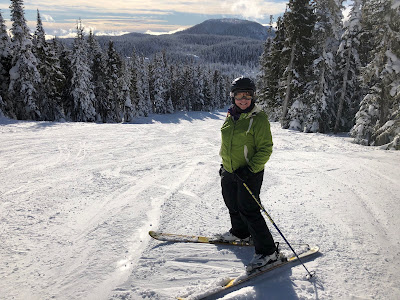
A Sunny Day at Mount Washington
 

So, anyways, when I was thinking about our discussion question in advance before meeting on Zoom, I was stumped. I had set no goals for 2022. I felt no desire to set goals for 2022. Was it because the past two years taught me that there is no point in setting goals, because as soon as we make a plan for travel or to get together with friends and family, another wave of COVID comes along with new public health restrictions that kibosh everything?

No, I am still a great believer in goals and plans. I would not have had the interesting life I've had if I'd been goalless throughout my life.

I used to visualize my life as a trek up a mountain. Each time I reached a summit, I would see another peak appear in front of me, and then I'd shift my aim to reach that next peak. My life was a life of endless striving, always going for the next big thing. My personal myth of progress.

Notice the past tense. Now that I've retired, have I given up? Am I just sitting here waiting for death? Certainly, in my younger years, that was how I dichotomized it -- move forward making progress, or sit still and fail/die. 
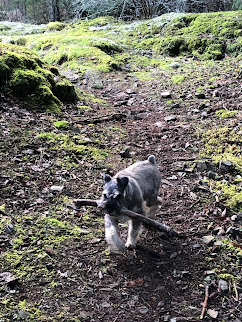
Abby with Stick
As I've settled into retirement, I've come to see a number of things quite differently. For example, I've stepped away from the academic life, which in the first few years of retirement included doing research, giving talks, publishing, reviewing manuscripts, and supervising students. It's time. I don't miss it. And I don't feel like less of a person because I'm no longer striving toward that next scholarly peak or adding another line to my CV. I climbed that mountain and now it's behind me.

I have been sitting with something Rob said to me. "Why are you always wanting to rush off somewhere else? We live in a beautiful part of the world in a perfectly nice house. Can't you just be content to stay here and enjoy what we have?"

His comments lay bare my myth of progress. If I always have my sights set on the next destination (summit, accomplishment, goal completion), do I even have time to notice where I am right now? That is Zen wisdom, to live in the moment, because the moment is all we really have. 

So I said to my Zoom friends, "I didn't set goals for the year. I think I'm letting go of striving and the myth of progress."

But does a leopard change its spots? Maybe the real truth of it is that work obligations used to suck up most of my waking hours. Now that I'm retired and able to spend time walking trails every day with Abby, cooking healthy meals, sleeping enough, spending time with friends and family, hanging out with Rob, writing, skiing, painting, doing yoga, and so on (and hopefully travelling again soon), I actually have the life I always wanted. I don't have to set goals to get here. I'm here.

Christmas 2021 Photos 

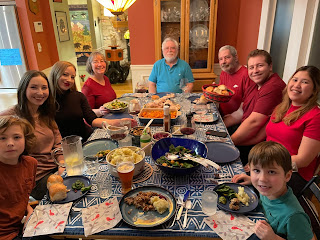
One brother and all three of my kids were here with their families for Christmas this year, and we had a wonderful time together. The good life.
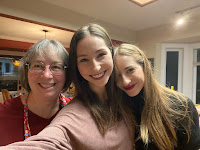

With Daughters

Christmas Dinner


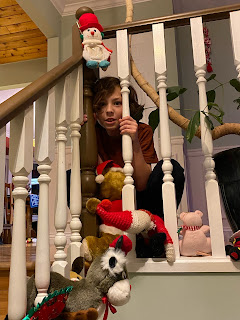
Grandson

Son and his Fiancee


 ***

* Why 9,000 rather than 10,000 steps a day? Because I had read a research article somewhere that evaluated whether the popular press had settled on 10,000 steps because it was a nice round number or because there was research evidence that 10,000 steps was, in fact, the best daily walking target for most people. The conclusion of the article was that, for most people, any increase in daily steps yielded health benefits, and specifically for women over 60, an average of 9,000 steps per day yielded the optimum health gain for the time spent (with daily steps beyond 9,000 still beneficial, but at a diminishing rate).

Wednesday, July 24, 2019

Two Very Different Cretan Cities

Well, "cities" might not be quite the right word.

As I wrote in my last blog post, I have just returned from a yoga retreat in Crete. As well as meditating and doing lots of yoga everyday, we went on a number of excursions to explore historical and fascinating areas of Crete. The first two excursions were to the Palace of Knossos and to Matala.

The Palace of Knossos

The Minoan city of Knossos on Crete is thought to be the oldest European city. It is located only a few kilometers from Heraklion, the largest contemporary city on Crete. Probably inhabited from neolithic times, this bronze age city was the centre of Minoan civilization. The first Palace of Knossos is thought to have been built around 2000 BC, and at its height, the palace and surrounding city had a population of 100,000 people. The total inhabited area was 10 square kilometers. The palace was abandoned around 1300-1100 BC.

The Palace of Knossos is in the Middle of a Wide Valley
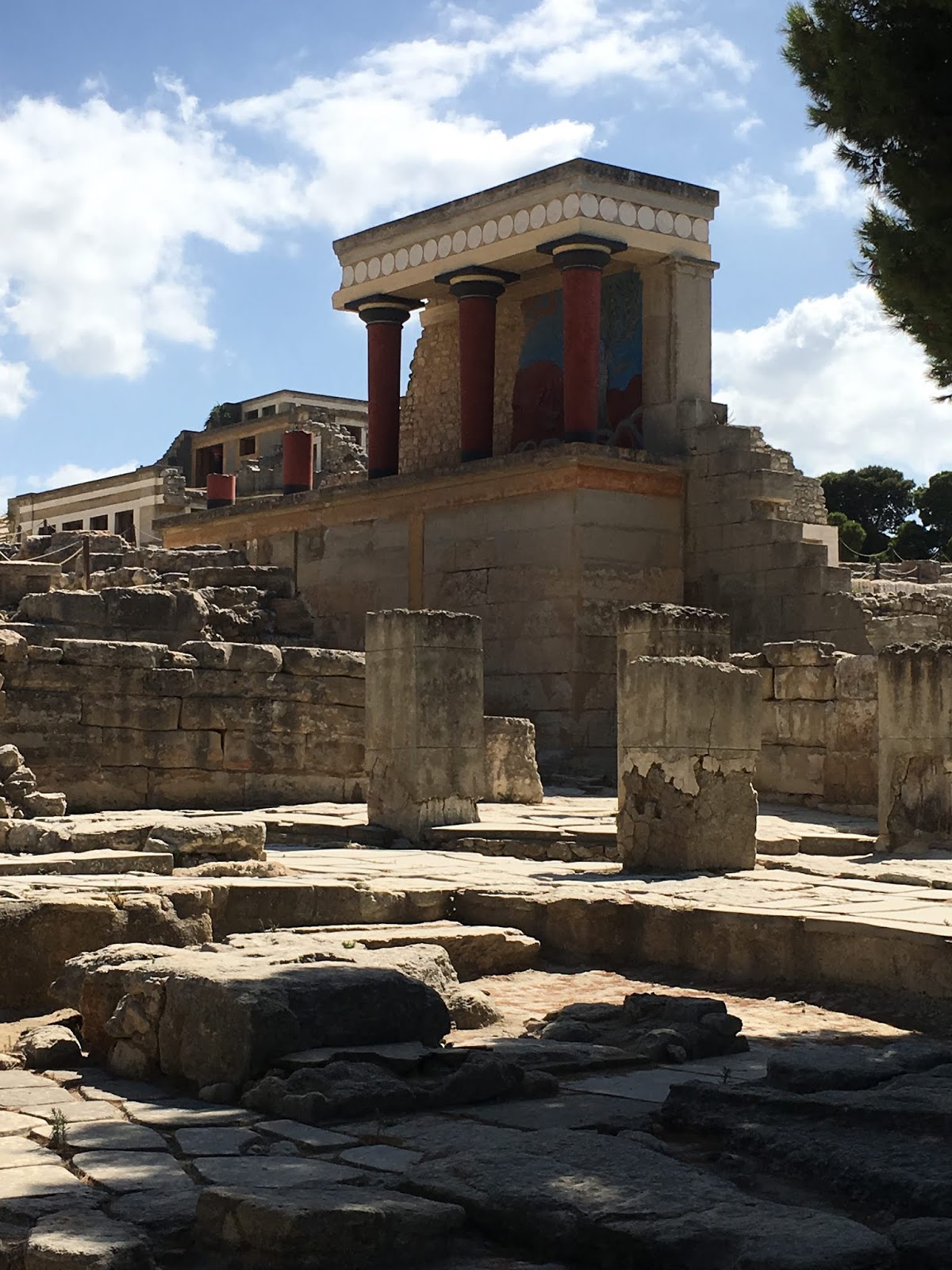
The Palace of Knossos was rediscovered by British archaeologist Arthur Evans. Excavations began in the early 1900's. Today some sections have been restored. My photo below shows the restored north entrance. There is a fresco that depicts a charging bull partially visible behind one of the columns.

Some Sections of the Ruins Have Been Restored
The Palace of Knossos is famous in Greek mythology because of the legend of the Minotaur. The Minotaur was a creature that was half man and half bull who was kept at the centre of a labyrinth constructed by Daedalus underneath the palace on the orders of King Minos. Theseus entered the labyrinth and fought the Minotaur. Theseus was able to find his way out of the labyrinth by following the thread given to him by Ariadne, the king's daughter. Then Theseus and Ariadne fled from Crete.

A Painting of the Minotaur
I can't believe I was actually there, in this historic place I had read about in books!

On the afternoon we were there, it was very hot, or so it seemed to this northern gal. After we had wandered all over exploring the ruins, Theo gathered us together in the shade and led us in a meditation. He had us visualize entering the labyrinth. For me, this and the subsequent meditations were powerful experiences.

Matala

A few days later, we travelled to Matala on the south coast of Crete. The cliffs of Matala have many caves, ranging in size from small ones that could fit a couple of people to the ones the size of a large room. It is not known how the caves came to be there, but it is most likely that humans dug them out to use for habitation. In the 1960's hippies descended on the community and lived in the caves.

We made use of one of the caves for our daily meditation session, much to the consternation of some swallows who had nests on the cliffs.
Climbing Up to the Caves of Matala
After we came down from the caves, our group split up. I went with three others to have a cold drink in a beachfront bar. Then we explored the little town.

The hippie presence was everywhere, from the colourfully painted sidewalks, to VW vans parked all around and represented in murals, to tributes to John Lennon painted in the square.

 
Goofing Around with Nura


Exploring Matala


We had a lot of fun browsing in the shops. But at this point, we didn't dare buy anything because we had no suitcases in which to bring stuff home! (Click to read about the lost suitcases.)

After shopping, we went for a swim in the Libyan Sea (the part of the Mediterranean Sea south of Crete). The water was so refreshing -- a wonderful feeling on a hot afternoon. Theo's tent provided some welcome shade. 

Our Tent on the Beach with the Caves Behind

We ended the day with a beautiful dinner at the Sunset Taverna, so named because it offered a spectacular view of the sun going down. After dinner, we walked back to the beach and I took the photo below. Idyllic.

 
A Beautiful Sunset
 
But, the day was not over yet. We still had a long drive back in the dark to the place we were staying, over mountains and around hairpin turns. We stopped high on a mountaintop and all got out of the cars to look at the stars. It was an amazing day.


Thursday, October 30, 2014

Methane Swamp


I have just started a new painting. I call this one Methane Swamp. 

Last year at Thanksgiving, Rob and I were on our own, so we decided to go camping. We have a truck and camper. It is a new, quite comfortable three-season camper. It has a slide, so it is roomy, and the kitchen is far more functional than in most campers. 

Canadian Thanksgiving is in early October, so although the evenings are chilly, the weather is still fine for camping. We went to the mountains, and camped at a lovely place called Mill Creek. Although it is clearly a favourite place for random campers during the summer, judging by the large number of fire pits, areas of trampled grass, and abandoned beer cans, in October we had the place all to ourselves.

We arrived Saturday evening when it was already getting dark. We spent the next day hiking along the creek. That evening, I cooked Thanksgiving dinner in the camper. We had Cornish game hens stuffed with rice and cranberries, veggies, salad, dinner rolls, and wine. It tasted wonderful! It was the first time I had ever used the camper's oven, and it worked just fine. I didn't attempt pumpkin pie, however. Maybe next time. 

On Monday morning, we hiked around the area a bit more. We discovered that we were near a series of interconnected swamps. A trail cut along the hillside above the swamps. I scrambled down the steep hillside to get down to the pools and stream. 

The area was visually interesting. Dead white trees poked up out of the water at various angles. The water was shadowy blue and black. There were hummocks of yellow grass, and red oxide mud along the shoreline. We observed that methane gas was bubbling up from the mud on the pond bottom. The place had a mysterious, almost ominous feeling to it. I took many photos, knowing that I wanted to paint the scene, but not having time that morning to paint on location. 

It is a year later, and I have finally gotten around to uploading the photos off my camera onto the computer. I looked at my methane swamp photos and was disappointed. They were dark, and too busy. They did not represent well what intrigued my eyes when we were there. 

I finally decided on one particular picture to use as a reference photo and printed it out. After considering it further, I chose to focus on the top right hand corner of the photo. I took a ruler and (cleverly) marked out a rectangle the same dimensions as my canvas. This solved a problem that I often have when using a reference photo: the photo is seldom exactly the same dimensions as my canvas, and that makes it hard to get the drawing right. 

I am working on a smaller canvas than usual - 14 x 18 inches. I just finished a larger painting with quite a bit of detail, and it took me a long time to complete it. So this time I wanted to work fast and loose, and finish quickly. 

I drew the main shapes in, placing them carefully, but not putting in any detail. Then I painted in the white dead trees and their reflections, just roughly, and the yellow grasses along he shore. That was as far as I got the first evening. Tonight it took me about two hours to block in the trees, and some of the reflections in the water. 

As always, I am struggling to get the dark values dark enough. Also, this picture has lots of green in it. Green is my nemesis. I usually try to avoid using a lot of green as I find it hard to represent green the way I see it. But, in landscape art, it is not that easy to stay away from green! 

The image is quite complex. So far, I am having fun with it. 

Wednesday, August 5, 2009

Black Dogs of August

In folklore, there are phantom black dogs that roam through graveyards and patrol boundaries like roads and footpaths. Large and shaggy, with glowing red eyes, these ghost dogs may appear just prior to a death. Some say that if they look directly at you, you will die. In other myths, they appear to play the role of protector, for example, of the souls of the dead buried in a graveyard.

A myth dating from August 4, 1577, tells of a black dog appearing during a thunderstorm in a church in Bungay, Suffolk, killing two people and injuring a third. The same day, a similar black dog appeared in a church in nearby Blythburgh and people died there as well. Bob Trubshaw summarizes a number of folkloric accounts of black dogs, and another interesting website specifically on the August 4 events is at everything2.

Our black dog is medium sized, has brown eyes rather than red ones, and is merely high strung -- not ghostly and ominous. She's not a hell hound, just a brat.