Showing posts with label society. Show all posts

Saturday, January 2, 2021

Happy Highlights in a Bleak Year

The Big Picture

There is no doubt that 2020 was a tough year. More than 83 million people worldwide were infected with covid-19 in 2020, and more than 1.8 million have died. Every one of us knows someone who has had the disease, and even if the lives of those close to us were spared, we have heard the tragic stories of so many who have passed away, including, especially, our elders. 

Add to that the extreme wildfires in Australia and California, the explosion in Beirut, the murder of George Floyd, and the stomach-churning in-your-face pandemonium of American politics, and it is clear that 2020 has been a bleak year. 

Of course, there also have been heroes, collaborative efforts, and sweeping changes that have reaffirmed my faith in human nature and science. 

 Thank-you to the physicians, nurses, other health care workers, and long term care home staff who have worked so hard to save lives during this pandemic, even while putting their own health and well-being at risk. 

Thank-you to governments and public health leaders who have made the right choices during the pandemic, whether by quickly allocating funding to workers forced to stay at home, or by making the hard decisions to order unpopular public health restrictions before our hospitals were overwhelmed. I count our public health officer here in BC, Dr. Bonnie Henry, among the heroes of the pandemic.

Thank-you to the essential workers who have made it possible for others of us to stay home. As well, I thank the everyday heroes, my friends and neighbours, who have trusted science and chosen to comply with quarantines, physical-distancing guidelines, and mask wearing to protect themselves and others around them, day after day after day. It has been hard, and will continue to be hard for some months to come. 

Thank-you to the scientists who have pulled out all the stops to develop safe vaccines in record time. This accomplishment has involved a level of international scientific collaboration that is unprecedented. It shows we can work together when we understand the gravity of an problem. Let's hope the same level of dedication and global collaboration will next be applied to the existential problems of climate change and species extinction. 

At a Personal Level

I have been very fortunate in most ways throughout this pandemic, and for that I am deeply grateful. Yet, even so, there have been some sad times, personally, during 2020. Our beloved dog, Kate, died in July. Shortly after, our cat became ill and his health continues to decline. Our retaining wall at the back of our property failed, and repairing it will be difficult and expensive. We've missed being able to spend time with friends and family in person during much of the year. 

Yet, in the grand scheme of things, these are minor and temporary wrinkles. 

Overall, for me 2020 has been a year of much new learning and many happy moments (in spite of the dire pandemic backdrop). I realized Rob and I have had many joyful experiences in 2020 when I looked in my phone to find a few photos to illustrate this blog and ended up choosing 50!

Hawaii


We made a trip to Hawaii in January of the year with Rob's daughter and son-in-law and our two grandchildren. 
 
We had a wonderful time together, and we thank our lucky stars that we travelled when we did, before the Sars2 corona virus had begun to spread widely. 
Under the Banyan Tree


We loved spending time with the grandkids.
Bamboo


The island of Maui is beautiful. I found the varied topography fascinating, from the beach, to the tropical rain forest, to the top of the Haleakala volcano.


We were in full tourist mode in Maui, and we saw a lot.

While we were there, we began hearing on the news about a new and lethal virus spreading throughout China. Like so many other North Americans, we hadn't yet realized that we were on the verge of a worldwide pandemic.
Playing with Trucks on top of Haleakala

 In the meantime, we hiked, snorkeled, swam, kayaked, and went out on boat cruises. We marvelled at the sea life at the aquarium, and swam with turtles. 

We had a condo with a kitchen, so we breakfasted at the condo, and then usually made a picnic to take along on our day trips.  

Most evenings, we enjoyed trying out the various restaurants on Maui.

I have been to Maui before, but it was many years ago. So I was intrigued to revisit places I remembered from that trip.

We were lucky to have fabulous weather while we were there. Many evenings, we walked through the parks admiring the sunset. I have dozens of sunset photos, but I decided to only include the one. 

Our trip to Maui was the last foreign travel we will do for a long time. 


Enjoying the Outdoors on Vancouver Island

Back home in Canada, we had a wonderful time skiing at our local ski hill during February and the first half of March. In fact, we had the skis packed in the truck and were about to leave to drive to the ski hill on the day everything closed down in BC in mid-March.
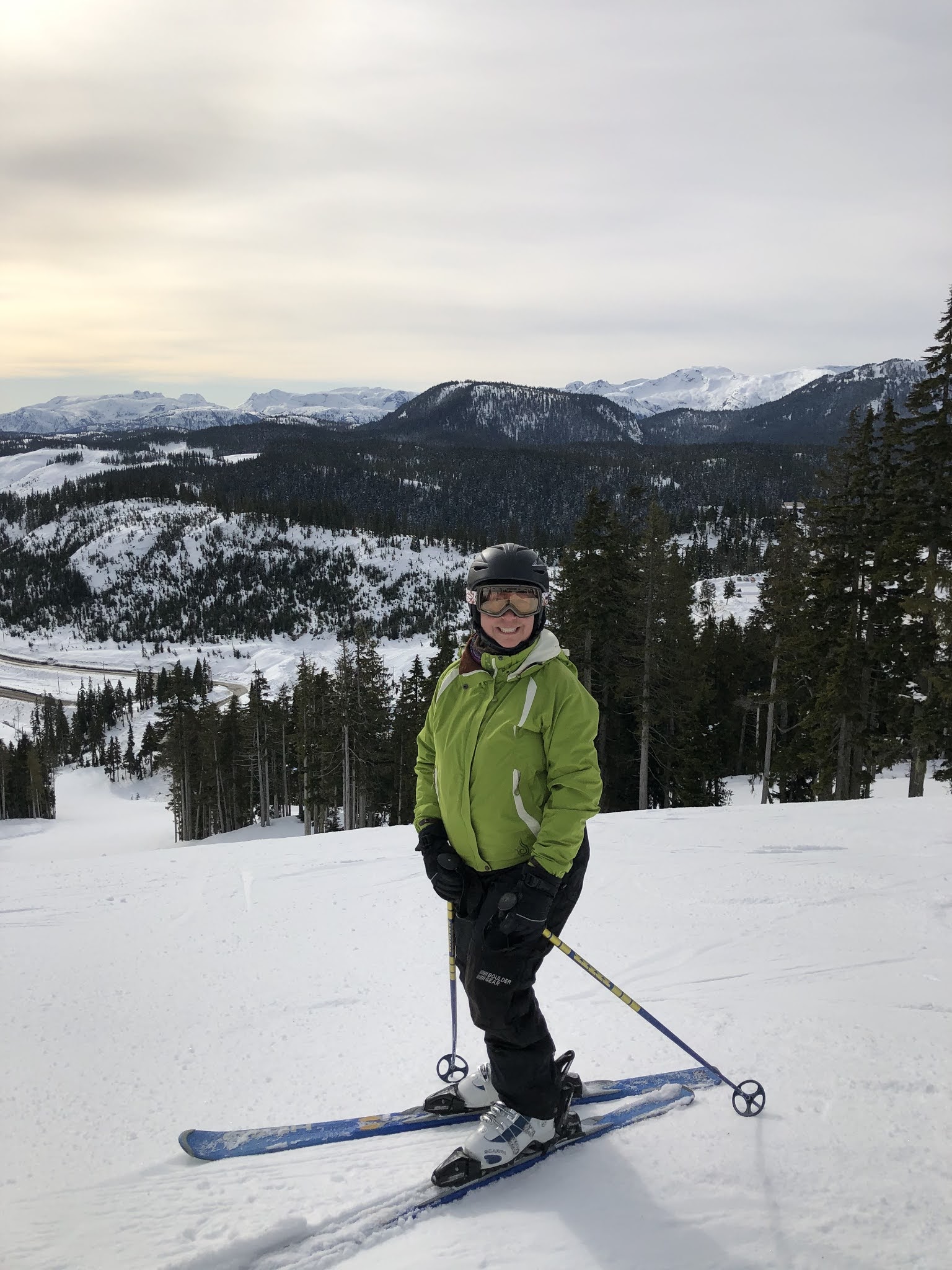
We checked the website one last time before we left (it's a 75 minute drive), and found out that the ski hill was closed because of covid-19 restrictions.


We live on beautiful Vancouver Island, so we switched to other outdoor activities.


In the initial six weeks of the pandemic restrictions, everyone was encouraged to stay home and only to go out among people as little as possible. However, outdoor activities were allowed, as long as we employed physical distancing. 

We are fortunate to live in a semi-rural area, where there are lots of trails through the forest and along the ocean shore. 

 As it became safe to do so, we began to meet up with friends and my adult kids for hikes and picnics. 

Hiking with my Son

 I realized that for me, not seeing my kids and grandkids throughout the spring months has been the most difficult period of the pandemic so far.

Hiking with my Daughter


 Although we talked on the phone and used videoconferencing, it was not like being together in person. 

In the summer months, the numbers of daily new cases in BC were in the single digits. So many of the earlier restrictions were lifted.


I helped my daughter out providing part-time childcare while she worked. I loved having "Grandma time" with the two boys!

So, although it was a terrible year in many ways, for me, the first six months of 2020 also had many happy highlights. During this pandemic, I have learned that being able to spend time with those I love, and also spending time in nature are things that allow me to find joy even in difficult times. 


Monday, November 23, 2020

The Cost of Responsibility

Many years ago, early in my career, I had the opportunity to travel to Quebec City to give a presentation at a conference. I was terrifically excited. I'd never travelled to Quebec City, nor, for that matter, had I visited any parts of Canada east of Saskatchewan. 

The conference was in an area of rehabilitation in which I was developing some unique expertise. I applied to my employer for funding, and they agreed to pay for the the plane ticket, hotel room, registration, and my meals during the weekend of the conference. It was a very good career opportunity. The icing on the cake was that one of my best friends had also had a paper accepted at the same conference, and was planning to attend too. Fun!

I was a new mom at the time, and our baby was about eight months old. The dilemma I faced was how to attend the conference and also look after my daughter. My husband and I decided that we'd go to Quebec City as a family. That way, he could care for her while I was in the conference sessions. 

We also decided we'd both take some vacation time off and stay for a few extra days after the conference. My husband, of course, paid for his own plane ticket and expenses, and the baby flew for free. We rented a B&B for the extra days after the conference. 

The morning that we were to leave to fly to Quebec, my daughter woke up with a red rash on her face. She'd never had anything similar. However, she seemed happy and her behaviour was normal, and she did not have a fever. The spots seemed to be fading a bit, so we made our way to the airport for our flight. 

But I was consumed with anxiety. What if she had something contagious, like measles? Perhaps we'd be putting others on the flight at risk, crammed together in a row of seats for the hours it would take to fly from Vancouver to Quebec City. 

So, after being cleared for our flight when we went through inspection, I pointed out the rash and asked whether they could change our seating assignment so we weren't seated right next to anyone else.

Well, you've never seen airline officials move so fast. They whisked us out of the inspection area and put us into a holding room while they contacted their supervisor. The verdict was that we couldn't board the flight, or any flight, until we had medical clearance to fly. 

As we made our way back home, I felt like a fool. Why had I opened my big mouth? The airport personnel hadn't even noticed the rash until I'd pointed it out. The baby was clearly fine. She was gurgling happily in her car seat.  

It felt like a crisis. At that point in my career, it was inconceivable to not show up to deliver a presentation that I'd promised to give, that was already printed in the program, and that I'd spent many hours preparing. My employer had paid for the conference and flight. Would they have to forfeit the money? Would I have to pay them back? Would we forfeit the cost of my husband's flight and the deposit for the B&B? My husband had cancelled his clients' appointments for the week. We would "waste" precious vacation days. 

After some frantic phone calls, we were able to get in to see a physician that same day. The physician examined my daughter and declared that the rash was nothing serious, perhaps heat rash or a mild food sensitivity. She filled out a medical authorization form and the airline put us on a flight the next morning, by which time the rash had totally disappeared. 

With friend & daughter; Chateau Frontenac
 We arrived in time for me to attend the opening reception of the conference. The entire conference was excellent, and we had a wonderful time in Quebec City. We happened to be there at the time of lobster fest so we ate a great deal of yummy lobster. 

Strolling Around Quebec City
 For a long time, I thought the lessons that I had learned from this experience were:

  • Don't create problems for yourself by pointing out minor issues that the authorities otherwise wouldn't notice
  • Something that seems like a huge crisis in the moment often turns out to be a minor bump in the road
  • Always leave some extra time before and after a scheduled event when travelling, in case of unexpected delays.

But through our collective experiences during this worldwide epidemic that has been dragging on and on, I suddenly remembered this long-ago experience and realized that I learned something else, too. 

Because what if my daughter's rash had NOT been a temporary, minor occurrence? What if it had been been measles or chickenpox or some other very contagious disease, and by going on the flight we exposed someone else -- perhaps an expectant mother or an elderly person -- to an illness that could cause disability or death? My desire to attend a conference and to tour Quebec City would have seemed like trivial reasons to have put others at such grievous risk. 

There can be costs for making the responsible choice. 

But sometimes the costs of making an irresponsible choice can be ever so much higher. 

Saturday, September 12, 2020

Entertaining in the Age of COVID-19

As the pandemic drags on and on, many of us are trying to find ways to live our lives again, while still following COVID safety guidelines. I'd like to share some of my strategies for hosting friends and family during these very strange times. 

Sunset at Parksville Community Beach

 Following Public Health Guidelines

Before I write about some of my strategies, I'd like to emphasize that I always look at our provincial public health website (BCCDC) first, and follow the guidelines there. In British Columbia, we have been successful at flattening the curve and reducing the infection rate, although during the last three weeks the number of new cases per day has begun to rise alarmingly. Lately, we've had upwards of 100 new cases per day identified, whereas a couple of months ago we were down to as few as 4 new cases a day across the whole province. On Vancouver Island itself, as of today, we've had a cumulative total of 190 COVID cases since the pandemic began.

During the flattest part of the curve, and in congruence with the advice of Dr. Bonnie Henry, our Provincial Health Officer, Rob and I felt comfortable gradually increasing the frequency of our outdoor socializing, and have hosted a number of outdoor get-togethers.

Knowing our Risks and Risk Tolerance

How we have evaluated our personal risk and the risk we pose to others has changed gradually as more scientific knowledge about the virus has become available. So our practices have slowly changed, and might change again should we need to adapt to an upsurge in infection rates. 

We have educated ourselves about what we need to do to stay safe and keep others safe. (See BCCDC  website linked above.) We are fortunate that we live in a semi-rural area and we're both retired. Therefore, we're not subject to possible exposure in a workplace. As well, neither of us has a pre-existing medical condition that puts us more at risk. Our biggest personal risk factors are our ages (64 for me, and 71 for Rob), and the fact that Rob is male. Neither of us is a caregiver for someone with fragile health.

Of course, other people have different risk factors to consider, depending on where they live, their personal health situation, work status, and their household members' circumstances. So consider nothing that I write here as a recommendation; it might not apply to you. Follow your local public health advice instead!

 Where to Meet

Mothers' Day 2020

The short answer to this is -- outdoors! We live in a climatic zone where May through September weather is usually quite lovely, and fine for gathering outdoors. 


One of our first get-togethers was with our daughter and her family for Mothers' Day in May. We met at a local beach. We brought separate food for ourselves and they brought their own picnic. We made sure to maintain two meters (six feet) of distance. 

Over time, we formed a bubble with our daughter, son-in-law, and two grandchildren, so we now share food, sometimes meet indoors, and are more relaxed about the the two-meter distancing.


As well as meeting at parks, we have hosted people for gatherings on our deck. We have a large outdoor deck, where it is possible to have 10 or more people and still maintain appropriate social distancing.

Service Group Meeting Outdoors
For example, we hosted a meeting of our service club on our deck. I forgot to take a photo of any gatherings on our deck, but have included one here of our service club meeting outdoors at our local community centre, where physical distancing was possible. (Note that members of the same household were able to be seated close to each other.)

We've also continued to make good use of local parks. For example, my son and girlfriend met us at a popular picnic site at a lake. They drove separately and I brought my grandsons in my car. Although other families were at the park, we had no difficulty maintaining a two meter distance from them.

Picnic at a Park

We shared the same picnic, but used hand-sanitizer liberally. 

Finally, in our jurisdiction, public gatherings are legally limited to 50 people. However, for us, practically, we have limited gatherings we've hosted to a handful of people, and never more than a number that can easily keep a 2 meter distance on our deck.   

Cleaning and Sanitizing

People who know me well know that housecleaning is not my favourite activity. Nevertheless, I have done a lot of cleaning during the pandemic. 

When people come over to our deck, we clean the table and chairs with disinfectant. If no-one has used the deck for a number of days, we leave it at that (because the virus cannot survive for long outside in the UV light). But if it has been used recently, we also clean and sanitize the railings and any other surface that might be touched. When guests come, they select a chair cushion from the storage box, so that they are the only person who has touched their cushion.

We are fortunate to have more than one bathroom. So if we are expecting anyone to come over, we designate the main bathroom as the guest bathroom and do not use it. I clean and sanitize the entire bathroom, paying particular attention to high-touch surfaces such as light switches, faucets, door knobs, and the flusher handle. I provide single use towels, soap, and a spray bottle of disinfectant. I leave the lights on, toilet over up, and door open. After the gathering, I leave the bathroom to rest for a couple of days, then clean it again. 

We provide bottles of hand-santizer placed within easy reach of the guests. When cleaning up afterwards, I wash my hands with soap or sanitize them after handling anything someone might have touched.

In the cases when a family member has come to stay with us (my son or middle daugh

Wearing a Mask my Friend Made Me

ter), I cleaned the spare bedroom and then left it to rest for 2-3 days before they came. They had the main bathroom for their own separate use. Although they were inside the house,we practiced physical distancing during their visit (mostly). 

Food and Drink

As I mentioned above, early in the pandemic, we did not share food. Everyone brought their own. But as we've decided to once again offer guests food and drink, I have developed the following methods to reduce risks. I don't use all of these suggestions at the same time. It depends on who is present and their comfort level, as well.

  • no potlucks. I am the only person preparing food
  • drinks in cans and prepackaged items (although too much packaging is poor environmental practice, and the virus seems to be able to live longer on plastic packaging than on food)
  • only the host pours drinks
  • separate serving bowls and serving implements for the other couple
  • separate condiments for the non-household members
  • pre-plated desserts rather than self-serve, or only the host serves
  • provide hand-sanitizer and explicitly ask everyone to sanitize their hands before and after serving themselves
  • only one person or couple goes to the food table at a time
  • maintain 2 meter distance between people
  • compostable paper plates and compostable disposable cups
  • mask wearing except when eating
  • as the person preparing the food and setting out the dishes, I wash my hands before and after touching anything
  • guests not allowed to help with clean-up

Another thing we keep in mind is being prepared to cancel on short notice if either Rob or I don't feel well, or if the weather doesn't permit gathering outdoors. And, similarly, it's necessary to be understanding when a guest cancels, or doesn't feel comfortable gathering with others. I think it is good practice to explicitly remind people not to attend if they are not feeling well.

I will be interested to hear what others are doing in terms of hosting gatherings in places where the health standards permit some degree of social gathering.

Sunday, July 5, 2020

A Gradual Reopening of Our Social Life

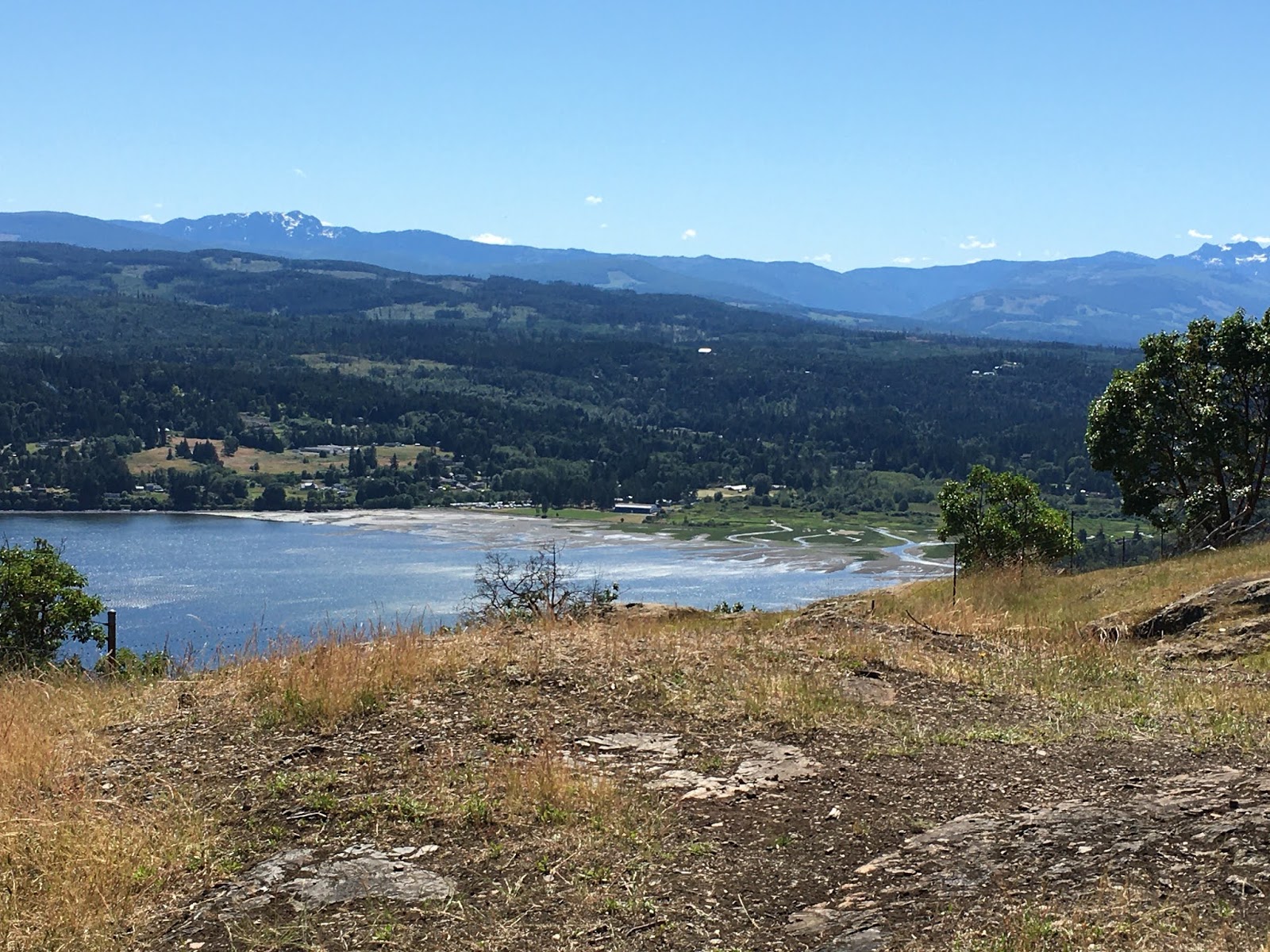
Nanoose Bay Estuary as seen from the Notch

June was the month of birthdays. It was also the month that we gradually began to see people socially again, although still with caution.

We are very lucky that we live in British Columbia, Canada. Under the wise leadership of our Public Health Officer, Dr. Bonnie Henry and Provincial Minister of Health, Adrian Dix, BC has done an excellent job of flattening the curve. I also give credit to British Columbians, who tend to be socially aware and community-minded. (That's one reason I like living here.)

Therefore the province was able to begin phase-three reopening at the end of May. That meant restaurants, retail stores, and shopping malls began to reopen. They were followed by dentists, hair salons, and other personal services. Now pubs are starting to open up again, as is the film industry. In order to open, businesses must have a plan for how to maintain physical distancing, and strict hygiene protocols. Although masks are not required in BC, they are recommended in indoor spaces if physical distancing isn't possible. 

On June 1, there were 2,597 novel corona virus cases in total in BC, and about 10 new cases per day being reported. On Friday, July 3, the most recent day for which stats have been reported, there were 13 new cases, and 2,947 total cases in BC. Since May 22, there have been only 5 new cases on Vancouver Island.


We began to gradually form a bubble with my daughter, son-in-law, and two grandsons. At first, I spent time with my grandsons only outdoors. But gradually we began to see them at their house and ours.

In early June, we celebrated my son-in-law's birthday at their house (carefully, using lots of hand sanitizer).
A couple of days later, my middle daughter came over from Vancouver and spent her birthday with us and visited for several days. She had been self-isolating in her small apartment, and we hadn't seen her since early February.

It was so great to be together again. We hosted a small family birthday dinner for her (seven of us in total). It was the first time my older daughter and her family had been in our house since before the COVID restrictions.

Later in June, my son had a birthday. He, too, came over to the Island and spent it with us. He and I went on a cave tour at Horne Lake Caves. There are more caves on Vancouver Island than in the rest of Canada combined -- more than 1,600 of them!


My older grandson rounded out the month of birthdays by celebrating his eighth birthday at the end of June. We went over their place and enjoyed ice cream cake on their deck.


We also hosted two other gatherings at our place, in both cases outdoors on our deck. We hosted the AGM and annual barbecue of our service club (15 in total) the last week of June (by some miracle the rain stopped for one day). The deck is large enough that we were all able to maintain a safe distance. And on July 2, I hosted a small writers' group meeting on the deck.

It has been a cool rainy month, but we have also gone for lots of walks and hikes.

Next plan -- camping!


Sunday, April 19, 2020

Learning to Let it Be

Magnolia Blooms
Stay the Course

Today is our 33rd day of staying home, sheltering in place. It's been almost five weeks.


Societal Lessons


This pandemic has had some lessons to teach us. At the the broader societal level, we have been learning that:
  • To have a good life, our close relationships and other human connections matter most of all -- more than engaging work, personal accomplishments, material acquisitions, or fun activities. 
  • Essential workers, especially health care workers, have become our everyday heroes. They are ordinary people doing their jobs in extraordinary circumstances. They have reached deep inside and found the courage and faith to keep going, taking care of us all by making sure we have groceries, caring for the elderly and treating the ill, even while risking their own health and lives. When called upon, will each of us find our own inner hero?
  • Leadership really matters. COVID-19 has shown us that the difference between good and poor leadership can be and presently is a matter of life and death. So we need to choose our leaders wisely.
  • We are interconnected, globally. "Globalization" has been a buzz word for decades, but now we are learning what it really means. The disease transmission process demonstrates how people in each city, country, or continent affect each other. If people across the border from you have the coronavirus (or people on the next continent), it is only a matter of time until your city (or continent) has it too. To address it effectively, we have to work together across our communities and worldwide, supporting the "have-nots" as well as the "haves." We can apply this same insight about inter-connectivity to worldwide economics, food-security, and climate change. 

Personal Lessons


Trillium on Today's Hike
The pandemic also has been teaching me some lessons at a personal level. The biggest lesson I have been learning is to "Let it Be."

All my life, I have been achievement-oriented -- a doer. I have approached life at full tilt, a ball of energy. I have no patience whatsoever, and have always felt that I must spend every moment of my life doing something productive. (On the plus side, I'm never bored.)

As you can imagine, I'm not very "zen." My greatest struggle in trying to learn to meditate is to make myself sit still "wasting time" doing "nothing" when I could be doing something productive.

My approach to life made the decision to retire difficult for me. 

I retired in stages. The first part of the process lasted a year or two, and during it I agonized about whether and when to retire. Finally, I decided to step down from my role as an administrator (which was very stressful and causing negative health consequences), but without actually retiring. I planned to transition back to a teaching role after a year of earned sabbatical leave. Halfway through my sabbatical year, I realized I was, in fact, ready to retire. I've now been retired for almost three years.

I have included several links to blog posts I wrote back then tracking my thought process about retiring. I found it very hard to let go of my work. What I did everyday seemed to be core to who I was. When I was no longer working productively, who would I be?

As it turned out, I love being retired. I discovered I was still me, and that my work did not define who I was.

But, I brought my characteristic energy and work ethic to retirement and immediately joined a whole bunch of groups and organizations. Before I knew it, I once again had a calendar full of meetings and other commitments. Yes, the meetings were about things that I like to do -- art, writing, community volunteer work, social gatherings, exercise activities, book club, academic writing projects, and so on. It was nothing like the grueling long hours of work I used to do. But still, I no longer had many unscheduled chunks of time left. I was being productive -- all the time. I was also beating myself up for not doing even more.

Manicotti stuffed with Spinach and Cheese
Homemade Berry Pie
Staying at home because of the pandemic has given me a second chance to retire. Everything disappeared from my calendar. I am finding out what it is like to just be rather than to always do. I haven't had time like this to let it be since I was a child.

I've discovered that I love just puttering in the garden or in the kitchen. It is peaceful to have unscheduled contemplative days. Although I have appreciated zoom conferencing weekly with my yoga class and my blogging buddies, and monthly with my book club and my writers' group, I've resisted adding any more conferences into my days.

It no longer matters if it's Monday or Saturday. I don't have to go anywhere. I can just hang out at home, and go for a walk if the mood strikes. I'm no longer personally responsible for single-handedly solving climate change, or for writing the defining book of the century, and that's okay.
Zoom Session with Blogging Buddies

Let it be

Friday, April 10, 2020

Reasons to Feel Grateful

The Trail Down Notch Hill

Today is Day 25 of our self-isolation. During the COVID-19 pandemic, like so many people around the world, Rob and I have been staying home, not seeing friends or family. Our trips away from home have been limited -- twice to buy groceries, once to get pet food, once to the liquor store, once to the vet, and twice to pick up takeout food. Three times people have dropped something off for us, and twice we've gone out to drop something off for others. We walk on the streets and trails near home, stop and chat with people while physically distancing, and otherwise stay home.

Lethargy

I was on a Zoom conference with some blogging buddies the other day, and when we went around the screen talking about our highs and lows of the week, a number of us said something quite similar. We felt lethargic, glum, blue, flat, anxious, and discouraged. We lacked energy and motivation to accomplish much of anything.

It is understandable that we feel anxious, scared, and unable to focus. Just about everything in our lives has suddenly changed. Even for those of us who haven't been personally touched by the disease (yet), we are affected by the grim death tolls around the world, and are afraid of dying or of loved ones dying.

Yet, even in these difficult times, we have so much to be grateful for.

Capable Leaders


I am so grateful to live here in Canada, where our health experts and politicians have done a very good job of managing the response to the COVID-19 crisis. Our federal, provincial, and municipal politicians have, for the most part, put partisan politics aside. They have worked together to address the pandemic by putting policies and support programs in place and moving resources to wherever they are most needed.
Dr. Bonnie Henry, screenshot from Global News Town Hall

In particular, I'm impressed with Dr. Bonnie Henry, our Provincial Health Officer here in BC. She and the Minister of Health, Adrian Dix, provide a daily briefing to British Columbians. They are clear, transparent, and consistent in their communications, and publish the health orders, ongoing statistics, and epidemic planning models on the BC Centre for Disease Control website for all to look at. They devote a significant part of each briefing to taking questions, and they answer the questions honestly and as thoroughly as they can, expressing genuine emotions.

Dr. Henry calls upon all of us to be kind, and to do our part. Although her orders in this emergency are the law and she has the authority to enforce them, she appeals instead to our human decency and our desire to do the right thing to protect our families and communities. And British Columbians are rising to the occasion and following her health orders. Because of it, we are starting to see our epi-curve flatten. Our cumulative number of deaths in BC thus far has been low.

Bonnie Henry is a leader we all can look to with gratitude. Phil Dwyer of Vancouver Island has written a ballad about her that you can listen to by clicking this link: The Ballad of Bonnie Henry. This newspaper article explains how the songwriter wrote the song and had it recorded.

A final point that I'll make about our situation is that our good leadership did not occur by accident. It happened before COVID-19. We voted for decent people who put their civic duty ahead of self-serving aims. As a country, we have invested in universal healthcare, and paid taxes to fund pandemic planning long before this pandemic became a reality. As a country, we have invested in equitable education for all. A populace that has good critical thinking skills is more likely to support and trust their scientists and other experts, and therefore to be well-placed to respond in a community-minded way when a crisis occurs. I am glad I live where I do.

A Glorious Spring


Wildflower by the Trail
I love springtime, as the trees begin to bud, the wild flowers start to bloom, and the birds and bumblebees return to our yard. The hummingbirds are in the blossoms, the eagles are wheeling overhead, and every evening the frogs in the nearby wetlands sing, making an amazing racket.

Crocuses in March
We have been especially lucky the last two weeks to have had lots of sunny days, and I have spent hours and hours out in the garden. I have dug up and planted a small vegetable plot. I have transplanted some shrubs, added more flowers to my spring garden, done lots of yard cleanup, turned over the compost multiple times, and spent a lot of time weeding (although there's still much more to do).
Magnolia Tree

The magnolia tree that I planted last year is blooming. The first of the rhododendron bushes burst into bloom today. I have really been enjoying gardening, and also my forest walks.

Staying Connected

One of the really hard parts of having to stay home is not being able to see people. I miss my kids and grand-kids a lot. Normally on Easter weekend, we would all be getting together and sharing a big dinner. I miss my friends, and all the people in the community that I usually see through volunteer work or in my book club, writers' group, art group, yoga class, and so on.

But at the same time, we have been reaching out to each other and staying connected in other ways. I have been making use of good old-fashioned telephone calls, especially to check in with my kids. I have zoom-conferenced with various groups, including my yoga class. I've messaged with my two older grandsons, and read stories to the grand-kids via FaceTime. I went for a physically distanced walk with my daughter. A screen is no substitute for being with people in person, but it has sure thrown into sharp relief what really matters in life -- the people you love, friends, and community. I'm grateful for the ways we are finding to stay connected. As for sheltering in place, as it turns out, Rob is a pretty good companion to spend my days with.

What are you feeling grateful for?

Tuesday, March 31, 2020

When the Cracks Start to Show

Cracks Appearing*
Like many of you, dear readers, I am sheltering in place as ordered by our provincial Public Health Officer, Dr. Bonnie Henry. Rob and I closed our doors starting the afternoon of Monday, March 16. Since that time more than two weeks ago, we have both stayed home. I went out once a few days ago to buy some groceries and Rob went out yesterday to buy pet food. We picked up takeout food on Saturday. (At least I think it was Saturday. All the days and dates have become a blur.)

Other than that we haven't left home and our immediate neighbourhood. We haven't seen friends or family members.

We are very fortunate in that we are both retired, and therefore not worried about having to work or about loss of pay. We have a roomy home and yard, and because we live in a semi-rural area, we can walk on the streets and trails nearby, seldom encountering anyone.

Also, we are both people with many solitary interests. During normal times, neither of us has any difficulty entertaining ourselves for hours and days at a time, for example, me with writing, reading, gardening, and academic work, and Rob with woodworking, reading, outdoor projects, and watching movies.

And yet.

These are not normal times. We are living through a cataclysmic event affecting the whole world -- a pandemic. There is an ongoing media barrage showing us the mounting number of cases and deaths around the world. It is frightening as we contemplate the extent of human suffering; worry about health care workers, family, and vulnerable friends; and wonder whether our own lives are at risk.

I have found it hard to pull myself away from reading and watching coronavirus news stories. I have an irrational feeling that if I'm not tracking the news constantly, it will get worse the minute I look away.

Witnessing the progress of the pandemic, while also being sequestered at home and having all of our usual activities come to a halt, is stressful. It's also hard on relationships, and on individual mental well-being.

J.P. Sears recently posted a funny video called How to Destroy Your Relationship During the Quarantine, which you can watch by clicking here.

The video is funny, but the stresses on relationships are real.

Parents staying at home with children who are not in school or daycare may be trying to work from home while also finding ways to keep the kids who have been cut off from their friends and usual activities engaged, or at least not fighting with each other. Grandparents who otherwise could provide respite are in the demographic most at risk from the virus.

Children absorbing bits of the news may be anxious and fearful, and express their feelings by acting out.

Young people who are dating but not living in the same household may be struggling to hold their relationship together or tempted to ignore physical distancing.

The sandwich generation may be worried sick about their elderly parents on the one hand and their kids and jobs on the other.

Couples may find that the texture of their relationship has changed. Many of the activities and routines they enjoyed together are no longer available. Each may be responding to the crisis in a different way, or be in a different stage of coping. For example, one may be in avoidance mode while the other is seeking extra closeness and reassurance. Or one may be full of plans for new activities while the other can't drag him/herself off the couch.

The stresses can be extreme when struggling to work from home, or if a loved one is ill, or if the financial consequences for the family are dire, or if one or both are health care workers or in another essential service that puts them at greater risk.

People who already live alone may find self isolating especially hard, as their usual social resources are no longer available. 

The little voice in the head might start saying things like:

I've discovered I actually don't like my family at all.
Why can't these little fiends give me even one single minute of peace and quiet?
He/she spends every single minute staring at their computer and doesn't even talk to me.
We have nothing in common.
He/she turns everything into a big emotional drama that is all about him/herself.
What's wrong with me -- I can't concentrate on anything!

It's normal to feel strong emotions during a crisis situation like this. And, as strange as it may seem, the challenges we are all facing present an opportunity.

We have the opportunity to be kind to ourselves and to be kind to each other. We have the opportunity to open up to each other and deepen the relationship with our partner in ways we may not take the time for during our regular schedule. We have the opportunity to really enjoy being with our family members rather than passing like ships in the night as each one races off to work, school, or other activities. Children have an opportunity to learn to be more considerate of their parents and to develop a more caring relationship with their siblings. We all have an opportunity to reach out to people we know, and especially to people who may be lonely or in need of extra support.

With a heightened sense of the value of life we have now that our mortality is staring us in the face, each one of us can pause and take a long look at this beautiful planet we inhabit and be grateful for the life all around us right now.   
Life and Creativity Thrive in Cracks*
*Photos are free Shutterstock images from pixabay.com. 

Monday, March 23, 2020

Twelve Things To Do That Don't Involve Screen Time

The Pond on a Sunny Day
The other day, a notification popped up on my my screen that kind of shocked me. Apparently, my average screen time last week was more than seven hours a day. Wow!

That was for my phone and tablet alone, and didn't count my computer time (which was quite limited last week) or my TV time (which was, in fact, zero*). Although some weeks I spend a lot of time on my computer if I'm working on writing or revising my novels or on academic work, I do try to limit the amount of additional time I spend staring at my phone or my tablet. More typically, my daily average is between one to two hours on the phone and tablet.

Some of the things I do on my phone and tablet are good, useful things. I am learning a second language, and I spend up to an hour on Duolingo doing that each day. I do all my blog reading and commenting from my tablet. I use the map program on my phone to navigate. I keep in touch with groups I am part of via email.

But seven hours is far too much time to spend staring at a little screen. No wonder I have had tired eyes and a slight headache.

I admit it. I have been compulsively looking at news websites for hours every day, reading and watching updates and reports about the COVID-19 pandemic. Although it's good to be informed, I've been overdoing it. It's not psychologically healthy to be as immersed in the pandemic news as I am. It makes me feel anxious and scared, and it eats up time that I could be using in more productive and healthy ways. To get my mind off the pandemic, often I end up watching an episode of a series or some TED talks or author interviews to divert my mind with other stuff. More screen time. 

Perhaps some of you are having a similar experience? Sheltering in place, anxious about the future, unable to participate in our usual community activities and groups, and physically separated from friends and family, suddenly we are filling our time with -- what?

Homemade Soup and Biscuits
Here are a few ideas. These are some of the things Rob and/or I have been doing that don't involve screen time.

1. Lots of cooking and baking. Using up those items way in the back of the cupboard.

2. Cleaning the house. Goodness knows I am not a housekeeping role model, but cleaning has the useful property of being something you can do that doesn't take a lot of concentration. My house certainly needs plenty of cleaning; it could keep me busy for weeks! The added bonus is that I can feel as if I'm doing something practical related to COVID-19. Doorknobs disinfected.

Evening Walk
3. Going for walks. My wearable fitness device tells me that I have been far more active this week than usual in terms of steps taken, kilometers travelled, and calories burned. The dog likes lots of walks too, and sometimes I've been able to talk Rob into coming along as well.

4. Read a book, an actual physical book. Presently I'm reading Radicalized by Cory Doctorow, which is on this year's Canada Reads shortlist.

5. Start a new project. Rob has been busy in his workshop building a new set of speakers. I have started keeping a daily journal while sheltering in place.
One of the New Speakers (with Green Baffle)


Daily Journal
6. Phone family and friends, and anyone you know who's on their own. I have been phoning my three kids a lot. Although I can't be with them physically, it's good to hear their voices and talk through the challenges we are facing day by day as we all practice social distancing and sheltering in place. I've talked to my grand kids too several times, and I've enjoyed chatting with a number of friends and other family. We are healthy and well, and very fortunately, so is everyone I know, thus far.

7. Yard work. Last week, we had lovely weather, and I spent quite a bit of time in the yard raking up branches and evergreen cones, sweeping the driveway, and digging up my vegetable garden in preparation for planting when the soil warms up a bit more.
Spring Flowers are Popping Up in the Garden
Sweeping the Walk


Washing the Truck
8. Wash the car/truck. This is allowed where we live; there are presently no water restrictions.

9. Get out in nature. Although sometimes I walk along the streets of the neighbourhood, most days I go out for a short hike on the trails. It is very soothing to the soul to be in green spaces, and to be among the animals and plants as spring makes its glorious appearance.

Hiking Along the Shore

10. Meditate or do yoga. Tara Brach does amazing guided meditation podcasts that she makes freely available. Appreciative followers can donate.


11. Play cribbage, card games, or board games with your housemates, or solitaire if you live alone. Rob doesn't play cards or board games, although he'll sometimes play crib with me to humour me.

12. Write an actual letter with pen and paper, and send it to someone special via the actual postal service.

13. Stress eat, guzzle wine, and compulsively touch your face. No. Wait. Don't do any of those things!

You'll notice that I have not included creative writing or painting on the list. Somehow I can't settle my mind enough to concentrate on doing either right now. But I'm hoping that will change soon, as we adjust to this strange "new normal."

Take care, my friends.

*As many of you know, I scarcely watch TV at all. When I do watch a newscast, film, or episode, I usually do it on my tablet, unless Rob and I are watching a movie together.