Showing posts with label big ideas. Show all posts

Monday, January 17, 2022

Letting Go of the Myth of Progress


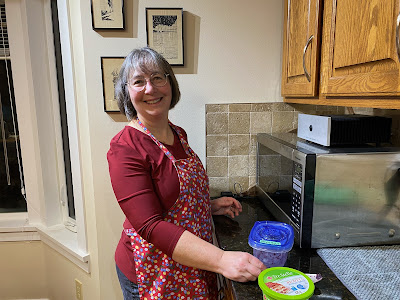
Me in the Kitchen

I was meeting recently with some friends on Zoom. Because of the latest Omicron wave of the pandemic, so much of our social life has gone back to virtual meetings for the time being, and the topic we were discussing was what our goals and dreams for the future were, once this Omicron wave subsides. I thought it was a fitting topic for the beginning of January, when so many of us set goals for the upcoming year.

I used to be one of those people. Although I didn't make New Year's resolutions per se, at the beginning of each year I typically took some time to review the past year's life events and accomplishments, and then wrote up a series of goals for the upcoming year. 

In true Type-A fashion, these were not vague wish statements such as: "I hope to exercise a little more this year." No indeed. I wrote out goals that were specific, measurable, achievable, realistic, and timely, or SMART goals. Examples of this type of goal is: "I will walk for a minimum of 20 minutes a day, 6 days per week." Or, I will sustain an average of 9,000 steps per day each week."*

My goal list usually consisted of 5-7 main categories, each broken down into subcategories, with goal statements under those. For example, the categories might be: Work, Health, Creativity, Social Life, Family, and Travel. Under Health, I might have subcategories such as Fitness, Food, and Work-Life Balance, and then under each one of those, I would develop SMART goals, often with associated timelines. I have written about this goal-setting process and some of the stumbling blocks here. 
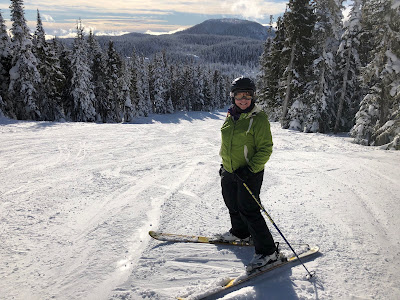
A Sunny Day at Mount Washington
 

So, anyways, when I was thinking about our discussion question in advance before meeting on Zoom, I was stumped. I had set no goals for 2022. I felt no desire to set goals for 2022. Was it because the past two years taught me that there is no point in setting goals, because as soon as we make a plan for travel or to get together with friends and family, another wave of COVID comes along with new public health restrictions that kibosh everything?

No, I am still a great believer in goals and plans. I would not have had the interesting life I've had if I'd been goalless throughout my life.

I used to visualize my life as a trek up a mountain. Each time I reached a summit, I would see another peak appear in front of me, and then I'd shift my aim to reach that next peak. My life was a life of endless striving, always going for the next big thing. My personal myth of progress.

Notice the past tense. Now that I've retired, have I given up? Am I just sitting here waiting for death? Certainly, in my younger years, that was how I dichotomized it -- move forward making progress, or sit still and fail/die. 
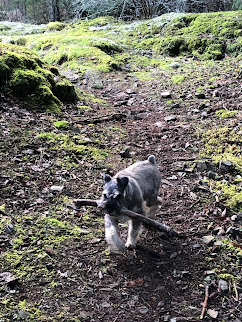
Abby with Stick
As I've settled into retirement, I've come to see a number of things quite differently. For example, I've stepped away from the academic life, which in the first few years of retirement included doing research, giving talks, publishing, reviewing manuscripts, and supervising students. It's time. I don't miss it. And I don't feel like less of a person because I'm no longer striving toward that next scholarly peak or adding another line to my CV. I climbed that mountain and now it's behind me.

I have been sitting with something Rob said to me. "Why are you always wanting to rush off somewhere else? We live in a beautiful part of the world in a perfectly nice house. Can't you just be content to stay here and enjoy what we have?"

His comments lay bare my myth of progress. If I always have my sights set on the next destination (summit, accomplishment, goal completion), do I even have time to notice where I am right now? That is Zen wisdom, to live in the moment, because the moment is all we really have. 

So I said to my Zoom friends, "I didn't set goals for the year. I think I'm letting go of striving and the myth of progress."

But does a leopard change its spots? Maybe the real truth of it is that work obligations used to suck up most of my waking hours. Now that I'm retired and able to spend time walking trails every day with Abby, cooking healthy meals, sleeping enough, spending time with friends and family, hanging out with Rob, writing, skiing, painting, doing yoga, and so on (and hopefully travelling again soon), I actually have the life I always wanted. I don't have to set goals to get here. I'm here.

Christmas 2021 Photos 

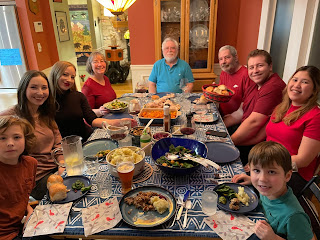
One brother and all three of my kids were here with their families for Christmas this year, and we had a wonderful time together. The good life.
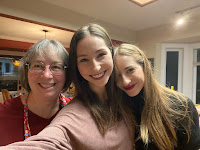

With Daughters

Christmas Dinner


Grandson

Son and his Fiancee


 ***

* Why 9,000 rather than 10,000 steps a day? Because I had read a research article somewhere that evaluated whether the popular press had settled on 10,000 steps because it was a nice round number or because there was research evidence that 10,000 steps was, in fact, the best daily walking target for most people. The conclusion of the article was that, for most people, any increase in daily steps yielded health benefits, and specifically for women over 60, an average of 9,000 steps per day yielded the optimum health gain for the time spent (with daily steps beyond 9,000 still beneficial, but at a diminishing rate).

Thursday, August 26, 2021

Afraid, Disappointed, ....and yet still Hopeful

Photo of Lytton, BC, by Cole Burston, The Guardian

Afraid

I am afraid. No, I am terrified.

We have spent the last 18 months living through a global pandemic. 

This summer, wild fires ravaged British Columbia, making this the worst wild fire season on record. At any given time, as many as 280 fires are burning in the province, and people in communities throughout the southern interior have been on evacuation alert, or evacuated from their homes for days at a time. 

The small community of Lytton burned to the ground during the heat dome earlier in the summer. In addition, as many as 570 people in BC died this summer as a result of high temperatures during the heat dome.

I live in a part of BC that is a rain forest. Yet, we are experiencing a level 5 drought (the most extreme level) and haven't seen more than a few drops of rain in two and a half months. The soil is rock hard, the local trails are closed because of fire risk, and the shrubs in our garden are dying. Rivers are running dry, salmon are not returning to spawn, and marine life has been decimated by high ocean water temperatures combined with extremely low tides.

People all around keep saying, "Get used to this. It's the new normal." But it's not the new normal. Things are about to get much, much worse. Because if we don't take action immediately and worldwide, we face the specter of of runaway, unstoppable global warming, according to the sixth IPCC report on the physical science of climate change. 

That's why I'm terrified.

Disappointed

We are currently in the middle of a federal election campaign in Canada. Two years ago, the Liberals under Justin Trudeau were elected with a minority government, and now Trudeau has called another election in hopes of obtaining a majority this time around. 

In a recent survey asking Canadians what they think is the most critical threat facing Canadians, more people cited climate change than any other issue, including government deficits, unemployment and the economy,  income inequality, and food security. Eighty-eight percent of Canadians said they have been personally impacted by climate change, and 78% said "they are very concerned about the negative impact of climate change on future generations." Between 73% and 84% of respondents recommended the following solutions: Industry adopting cleaner energy sources, increased use of renewable energy and clean electricity, use of new technology to offset carbon emissions, reduced fossil fuel usage, and implementation of government policies to support all these solutions. 


Yet, climate change has scarcely been mentioned by party leaders on the campaign trail. One exception is Annamie Paul, leader of the Green Party of Canada, who, unfortunately, has received relatively little press coverage. 

We don't have much time left to shift our trajectory away from uncontrollable heating of the earth. An election campaign is the ideal time to focus on the changes we want to see, and to elect leaders who will work to address climate change. 

So, I am disappointed. Disappointed and scared.

I am disappointed that the Liberals have made little progress toward meeting climate change goals during their two terms in office. Instead, they used our tax dollars to buy a pipeline. 

The New Democratic Party is a socially progressive party that I supported for years. Now led by Jagmeet Singh, the federal NDP has been silent on climate change policy and instead, seem to have put their efforts into propping up the Liberals. 

And, while federal and provincial politics are different, our provincial NDP party under John Horgan has been a huge disappointment on environmental matters. They have have gone ahead with Site C dam development in the northeast of BC, a liquid natural gas plant in the northwest, and spent millions of policing dollars to harass and arrest protestors at Fairy Creek, Canadians fighting to save one of the last intact old growth ecosystems on southern Vancouver Island (796 people arrested since May). This has occurred despite a forestry report they commissioned recommending a moratorium on logging stands of old growth, which the provincial NDP pledged to support last fall. 

The federal Progressive Conservative party platform under O'Toole, not surprisingly, recommends increased criminal penalties for Canadians who protest against pipelines or other "key infrastructure."

Aside from the Green Party of Canada, our federal parties are not taking the climate emergency seriously. 

Therefore, I now actively support the Green Party, federally and provincially. Rob and I went out a few days ago to put up some large Green Party campaign signs. As we wrestled with the big heavy signs, struggled to pound stakes into soil that was as hard as concrete, and tore our jeans on blackberry brambles, at one point we looked at each other and asked, "Where are all the young people?" 

In our electoral district, why are the people erecting the signs, running as candidate, and coordinating the campaign all old-age pensioners? Where are the people in their twenties, thirties, forties, and fifties? Have they given up on the democratic process? Are they too busy, too cynical, too alienated, or . . . ? I'm disappointed.

Still Hopeful

Yet, I am still hopeful. I am grateful to the many protestors at Fairy Creek, people of all ages, who have showed up week after week for the past year to protect the old growth. Some of those big trees are a thousand years old, and they are very effective carbon sinks. Old growth forests provide habitat for animals, including many on the endangered list. Only 2.7% of BC's old growth still remains, and once it's cut it's gone forever.

The RCMP arresting protesters at Fairy Creek, The Narwhal


I am still hopeful, as many of the younger people in my life are very involved in making the world a better place. They are working to raise awareness about issues of social justice, including violence against women, mental health support, and acceptance of racial and gender diversity. They work to improve public transportation, environmental health, and community planning to address climate change. Social justice and climate action go hand-in-hand.

Having seen the way the scientists, medical experts, and leaders at all levels from local to international have worked together to adopt public health measures to keep us safe and to develop a COVID vaccine in record time, I know that humans around the world can accomplish a lot in the face of an emergency. It gives me hope that we will attack the climate emergency with the same sense of urgency.

We still have a window of time, although it is shrinking rapidly, to avoid the worst consequences of climate change. 

One place we all can start is by getting involved in this federal election. Ask your local candidates how they will address climate change. Ask them about specific issues, like old growth forests, pipelines, raw log exports, job transition support for resource workers, and corporate subsidies. Get the climate emergency into the spotlight at campaign events. Learn what each party's platform says about climate targets. Volunteer to help out in the campaign of a party that has a strong record of action on the environment.

Still hopeful. 

Monday, November 23, 2020

The Cost of Responsibility

Many years ago, early in my career, I had the opportunity to travel to Quebec City to give a presentation at a conference. I was terrifically excited. I'd never travelled to Quebec City, nor, for that matter, had I visited any parts of Canada east of Saskatchewan. 

The conference was in an area of rehabilitation in which I was developing some unique expertise. I applied to my employer for funding, and they agreed to pay for the the plane ticket, hotel room, registration, and my meals during the weekend of the conference. It was a very good career opportunity. The icing on the cake was that one of my best friends had also had a paper accepted at the same conference, and was planning to attend too. Fun!

I was a new mom at the time, and our baby was about eight months old. The dilemma I faced was how to attend the conference and also look after my daughter. My husband and I decided that we'd go to Quebec City as a family. That way, he could care for her while I was in the conference sessions. 

We also decided we'd both take some vacation time off and stay for a few extra days after the conference. My husband, of course, paid for his own plane ticket and expenses, and the baby flew for free. We rented a B&B for the extra days after the conference. 

The morning that we were to leave to fly to Quebec, my daughter woke up with a red rash on her face. She'd never had anything similar. However, she seemed happy and her behaviour was normal, and she did not have a fever. The spots seemed to be fading a bit, so we made our way to the airport for our flight. 

But I was consumed with anxiety. What if she had something contagious, like measles? Perhaps we'd be putting others on the flight at risk, crammed together in a row of seats for the hours it would take to fly from Vancouver to Quebec City. 

So, after being cleared for our flight when we went through inspection, I pointed out the rash and asked whether they could change our seating assignment so we weren't seated right next to anyone else.

Well, you've never seen airline officials move so fast. They whisked us out of the inspection area and put us into a holding room while they contacted their supervisor. The verdict was that we couldn't board the flight, or any flight, until we had medical clearance to fly. 

As we made our way back home, I felt like a fool. Why had I opened my big mouth? The airport personnel hadn't even noticed the rash until I'd pointed it out. The baby was clearly fine. She was gurgling happily in her car seat.  

It felt like a crisis. At that point in my career, it was inconceivable to not show up to deliver a presentation that I'd promised to give, that was already printed in the program, and that I'd spent many hours preparing. My employer had paid for the conference and flight. Would they have to forfeit the money? Would I have to pay them back? Would we forfeit the cost of my husband's flight and the deposit for the B&B? My husband had cancelled his clients' appointments for the week. We would "waste" precious vacation days. 

After some frantic phone calls, we were able to get in to see a physician that same day. The physician examined my daughter and declared that the rash was nothing serious, perhaps heat rash or a mild food sensitivity. She filled out a medical authorization form and the airline put us on a flight the next morning, by which time the rash had totally disappeared. 

With friend & daughter; Chateau Frontenac
 We arrived in time for me to attend the opening reception of the conference. The entire conference was excellent, and we had a wonderful time in Quebec City. We happened to be there at the time of lobster fest so we ate a great deal of yummy lobster. 

Strolling Around Quebec City
 For a long time, I thought the lessons that I had learned from this experience were:

  • Don't create problems for yourself by pointing out minor issues that the authorities otherwise wouldn't notice
  • Something that seems like a huge crisis in the moment often turns out to be a minor bump in the road
  • Always leave some extra time before and after a scheduled event when travelling, in case of unexpected delays.

But through our collective experiences during this worldwide epidemic that has been dragging on and on, I suddenly remembered this long-ago experience and realized that I learned something else, too. 

Because what if my daughter's rash had NOT been a temporary, minor occurrence? What if it had been been measles or chickenpox or some other very contagious disease, and by going on the flight we exposed someone else -- perhaps an expectant mother or an elderly person -- to an illness that could cause disability or death? My desire to attend a conference and to tour Quebec City would have seemed like trivial reasons to have put others at such grievous risk. 

There can be costs for making the responsible choice. 

But sometimes the costs of making an irresponsible choice can be ever so much higher. 

Wednesday, November 18, 2020

Procrastination Kickstart


The Beauty of Nature Inspires Me
Have you ever had a big project that you keep putting off, day after day, week after week? 

No matter how much you mentally flog yourself, you can't get started. You find an endless number of other things that suddenly need to be done instead, and manage to put off starting the big project this morning, and this afternoon, and this week. The stress builds, and the lack of progress starts to feel like a crisis. You don't feel good about yourself.

Procrastination is something that I struggled with during my career. I was fortunate to have work that was very self-directed. I had a lot of choice in what projects I chose to take on, and the freedom to structure my work-time as I chose, as long as the work got done. For the most part, I thrived with this much independence. But the downside of all that freedom was that procrastination could strike, and there was no one to tell me what to do and make sure I did it. I remember some projects that "fell off the side of the desk," and I regret to this day that I procrastinated and never finished them (or sometimes, never even started them).

Of course, now that I'm retired, there's way less stress. But I still find there are certain things in life that I procrastinate on. One of the good things about my lifelong struggle with procrastination is that I've learned some strategies to address it. Here are some of them.

Am I procrastinating?

The first thing to do is to notice that I am procrastinating in the first place. 

I am a master of convincing myself that the reason I am not doing the project is because I am too busy, or because something else urgent has to be done first. I have to go out to get my daily exercise, or I have to clean the kitchen, or today is a perfect day to re-pot all the houseplants, or, etc., etc. If I keep myself in a whirl of busyness, I can justify to myself why I can't possibly start the project right now.

A variation on this is, I am so tired or overworked (because I've been so busy!) that I need to rest or do something fun and rejuvenating first. And the days go by. 

I Distract Myself by Going for Walks
And then something will pull me up short -- perhaps someone else has completed something similar to my project -- and I suddenly ask myself: "Wait! Why haven't I done MY project yet?" Or I start feeling really grumpy and annoyed with myself and I don't know why. 

If I stop and think about it, I realize I've been procrastinating.

What is the nature of the project?

Once I notice I've been procrastinating, it's time to figure out why. It turns out that I procrastinate on different things for different reasons.

There are things I have to do and things I want to do. There are things that are important, and things that are not very important.  

For example, I belong to a lot of different community groups. Often, in the excitement of the moment, I volunteer to do something, and then later find myself procrastinating and not wanting to do the thing I said I'd do. I feel as though I "have" to do it because I said I would. 

Strategies: Sometimes, the task is ill-defined or not super important, and just by having a conversation with someone, we decide to go a different route, and I'm off the hook. Sometimes it can be delegated. Sometimes, I simply buckle down and do it while making a promise to myself to not say "yes" so quickly next time when a volunteer is needed for that type of task. Externally imposed deadlines can be really helpful (e.g., it needs to be done by the next meeting). Often, once I make myself do it the first time, it becomes much easier subsequently. Little regular tasks are more likely to get done if I put them into a routine.

There are some things that are unpleasant but very important. These are things you HAVE to do, but really don't want to. An example is having a medical procedure that is necessary for quality of life. Helpful friends who have had a similar procedure can take some of the uncertainty away by talking you through it, making it easier to take action. Support groups or websites or fellow bloggers can be great resources, providing information and encouragement. 

When I discover myself procrastinating about things that I WANT to do, figuring out why I am procrastinating can be a lot more perplexing. 

Do I know how to do it?

Sometimes, I procrastinate because I don't know how to do something. The project can feel too big and overwhelming. The two most helpful strategies for me, in this case, are to research the topic area and to make a plan. Once I gather information about what needs to be done, and ways other people have done it, the project becomes less intimidating. With the information about what needs to be done, I can then sit down and make a plan. 

For a big project, I like to write my plan out. I break it down into specific goals and sub-goals, and list a number of very small, easy steps under each goal. Once I've broken it down into extremely small steps, it is much easier to begin. The whole project might be big, but I know I can figure out how to do each tiny step, one by one. 

What is the fear that keeps me from starting?

Very often, the root of procrastination is psychological. There is a deep-seated fear that your intended project, for some reason, triggers. Perhaps you're terrified of public speaking, and you know that once you've completed your project, you'll have to present it to others. So you don't even start, as a way of avoiding that scary future situation. 

In my case, very often my fears are related to perfectionism and fear of failure. Maybe my project won't be successful. Maybe what I produce won't be "good enough." It will fall short of perfect and reveal that I am a flawed human being.

When I finally zero in on the underlying fear, I can take some of the power out of that fear. Recognizing the nature of the fear helps to get me unstuck.

I can give myself a pep talk, reminding myself of other things I accomplished in spite of being afraid.

I can remind myself that no one really cares about my project but me, or how "perfect" it is. I can remind myself that it's not either/or: fail vs. perfect. There are a lot of gradations in-between. It is the journey that counts, not only the product at the end. 

Nature's Glory puts Fears in Perspective
The value of examining procrastination

Ultimately, personal projects and goals we set for ourselves (as opposed to those things we say we'll do to please others) are deeply important to who we are as people and what's important in our lives. If we wiggle out of doing things that are essential to our core values or stepping stones toward our life purpose(s), it is a sad personal loss, and sad for others, too, who'll never benefit from our gifts.  

Examining the causes of procrastination can get us unstuck and help us learn about ourselves. The things that seem hardest are often our best learning opportunities, and procrastination can be a signal that we are approaching one of those moments of transformation. 

So, what kind of project is it, you ask, that leads me to reflect on procrastination? I have needed a procrastination kickstart because I am seeking to publish my novel, and am starting to embark on that publication process.

Sunday, May 24, 2020

Settling In; Moving On

Hiking on Vancouver Island, with Physical Distancing

 I'm pleased to report that the revisions to my novel have been going very well recently. This is officially draft number 3. I've expanded the ending, added scenes, and tweaked characters. I've also slashed out a lot of stodgy prose -- adverbs, nominal phrases, redundancies, and the like. It's leaner and punchier. I've managed to cut 5,000 words, which is good, because it's too long.

Unfortunately, when I'm successfully working on my novels, my blog writing doesn't fare as well. So today, I'm taking some time out to post an update.

Pandemic Panic

Like so many others, I was quite calm about staying home and sheltering in place at first. It was an adventure -- a chance to cook new things and use up supplies in the back of the cupboard. "Staying at home for a couple of weeks: how hard can this be?" I said to myself.

But then, I found myself staring at the screen in horror as the death tolls mounted in Italy and Spain. I stayed up into the wee hours poring over corona virus statistics from John Hopkins University, Worldometer, CBC, and the BC Centre for Disease Control. I spent 3 to 5 hours online every day reading news articles, watching videos and live broadcasts, and tracking the statistics. I became a fan of Dr. Bonnie Henry, the top public health officer for BC, and watched her daily update without fail.

Will the Rain Never End?
It gradually dawned on me that we were in this for the long haul -- years, not weeks. I missed seeing my kids, grandchildren, and friends. I went through some pretty bleak weeks, made worse by a bout of cold rainy weather.

The five stages of grief and loss -- denial, anger, bargaining, depression, and acceptance -- I've been going through them all. 

You'd think that staying at home with everything wiped off my calendar would give me ample time for my creative pursuits, writing and painting, which I never seem to have enough time for. But no. For the first six weeks, I couldn't work on my novels. I couldn't seem to focus. I was too anxious. I had to spend all my time reading about the corona virus. 

Perhaps the fact that I'm writing a three-novel apocalyptic trilogy had something to do with it. It's a little creepy when bizarre things I made up and wrote about in my fictional tale have suddenly started happening in real life.  

Settling In 

It's now Day 69 for us. Tomorrow we'll hit the 10 week mark. 

We're starting to settle in. This is our life. We're getting used to it. 

(I'm writing this knowing, with immense gratitude, that I and my family have been extremely fortunate. We're fortunate to be living in BC, where wise Dr. Bonnie Henry has led the provincial epidemic response informed by science, and where the residents of the province have been very socially responsible in following public health guidelines. I'm fortunate to have not lost anyone in my social circle to the virus.)

Settling in means I'm getting comfortable with my life with its new, more restrictive parameters. I'm happy to have time to write, even though it's because so many of the other things I was doing have been put on hold. 

One of my friends said to me, looking a bit guilty as she said it, "I kind of like just staying home."

Adapting

I'm moving on with my life (while adhering strictly to the public health guidelines). Yes, things are different now, but that doesn't mean my life is on hold. I'm adapting to the new circumstances.

One of the advantages of being 63 years old is that I've had lots of practice at this. No, not with pandemics, but with difficult, wrenching life changes. 

I've moved a lot. Every move has meant leaving behind friends, my home, my job, favourite restaurants, and favourite walking trails. 

I've had injuries that have impacted my mobility. There were times I thought I'd never ski again because of knee injuries. I've learned to ski differently. I once broke a bone in my foot that wouldn't heal. I was in a cast for four months. I wondered if I'd ever walk normally again. 

Keeping in Touch
I've lost beloved family members. Every time it was extremely painful. It felt as if my own life had ended. I grieved. I came to acceptance. Time kept going along, and once again I found joy. I've adapted to changes and I've had a wonderful life. 

Moving On

Living in the age of the novel corona virus means finding new ways to do things, and continue to live a satisfying, fulfilling life.

I've started texting with my grandsons on Messenger. They love playing with the photo options and other media features. 

We enjoyed a physically distanced Mother's Day picnic with my daughter's family.

Mother's Day Picnic
Before the physical distancing restrictions, I was very involved doing fundraising with my local chapter of Lions International. All of those initiatives have been suspended. 

However, our Lions club has been out with other community members cutting broom. Scotch broom is an invasive plant species that is a problem on Vancouver Island. 

We can stay apart but be together while we cut broom. 
Rob with Broom


Clematis in Bloom


I have spent a lot of time out working in my lovely garden. Although the weeds are endless and I'll never keep up with them, I've been enjoying my gardening time.

I have planted tomatoes, herbs and a few other things in containers on my deck.

The flowering shrubs bring joy. And I'm quite pleased with my little vegetable patch, tucked in amongst the decorative plantings. 

Veggie Garden
On the long weekend, Rob and I went on a beautiful hike around the point with my son and one of my daughters. We enjoyed time together while still observing public health restrictions.

My Son
My Daughter


Another way in which we have adapted is that Rob and I are going for more walks together. To celebrate our recent anniversary, we picked up take-out sushi and ate it at a picnic table in the park. Then we went for a lovely walk around the harbour.

Not Too Old for Selfies
Settling in, adapting, moving on -- a good life.

Sunday, April 19, 2020

Learning to Let it Be

Magnolia Blooms
Stay the Course

Today is our 33rd day of staying home, sheltering in place. It's been almost five weeks.


Societal Lessons


This pandemic has had some lessons to teach us. At the the broader societal level, we have been learning that:
  • To have a good life, our close relationships and other human connections matter most of all -- more than engaging work, personal accomplishments, material acquisitions, or fun activities. 
  • Essential workers, especially health care workers, have become our everyday heroes. They are ordinary people doing their jobs in extraordinary circumstances. They have reached deep inside and found the courage and faith to keep going, taking care of us all by making sure we have groceries, caring for the elderly and treating the ill, even while risking their own health and lives. When called upon, will each of us find our own inner hero?
  • Leadership really matters. COVID-19 has shown us that the difference between good and poor leadership can be and presently is a matter of life and death. So we need to choose our leaders wisely.
  • We are interconnected, globally. "Globalization" has been a buzz word for decades, but now we are learning what it really means. The disease transmission process demonstrates how people in each city, country, or continent affect each other. If people across the border from you have the coronavirus (or people on the next continent), it is only a matter of time until your city (or continent) has it too. To address it effectively, we have to work together across our communities and worldwide, supporting the "have-nots" as well as the "haves." We can apply this same insight about inter-connectivity to worldwide economics, food-security, and climate change. 

Personal Lessons


Trillium on Today's Hike
The pandemic also has been teaching me some lessons at a personal level. The biggest lesson I have been learning is to "Let it Be."

All my life, I have been achievement-oriented -- a doer. I have approached life at full tilt, a ball of energy. I have no patience whatsoever, and have always felt that I must spend every moment of my life doing something productive. (On the plus side, I'm never bored.)

As you can imagine, I'm not very "zen." My greatest struggle in trying to learn to meditate is to make myself sit still "wasting time" doing "nothing" when I could be doing something productive.

My approach to life made the decision to retire difficult for me. 

I retired in stages. The first part of the process lasted a year or two, and during it I agonized about whether and when to retire. Finally, I decided to step down from my role as an administrator (which was very stressful and causing negative health consequences), but without actually retiring. I planned to transition back to a teaching role after a year of earned sabbatical leave. Halfway through my sabbatical year, I realized I was, in fact, ready to retire. I've now been retired for almost three years.

I have included several links to blog posts I wrote back then tracking my thought process about retiring. I found it very hard to let go of my work. What I did everyday seemed to be core to who I was. When I was no longer working productively, who would I be?

As it turned out, I love being retired. I discovered I was still me, and that my work did not define who I was.

But, I brought my characteristic energy and work ethic to retirement and immediately joined a whole bunch of groups and organizations. Before I knew it, I once again had a calendar full of meetings and other commitments. Yes, the meetings were about things that I like to do -- art, writing, community volunteer work, social gatherings, exercise activities, book club, academic writing projects, and so on. It was nothing like the grueling long hours of work I used to do. But still, I no longer had many unscheduled chunks of time left. I was being productive -- all the time. I was also beating myself up for not doing even more.

Manicotti stuffed with Spinach and Cheese
Homemade Berry Pie
Staying at home because of the pandemic has given me a second chance to retire. Everything disappeared from my calendar. I am finding out what it is like to just be rather than to always do. I haven't had time like this to let it be since I was a child.

I've discovered that I love just puttering in the garden or in the kitchen. It is peaceful to have unscheduled contemplative days. Although I have appreciated zoom conferencing weekly with my yoga class and my blogging buddies, and monthly with my book club and my writers' group, I've resisted adding any more conferences into my days.

It no longer matters if it's Monday or Saturday. I don't have to go anywhere. I can just hang out at home, and go for a walk if the mood strikes. I'm no longer personally responsible for single-handedly solving climate change, or for writing the defining book of the century, and that's okay.
Zoom Session with Blogging Buddies

Let it be. 

Tuesday, March 31, 2020

When the Cracks Start to Show

Cracks Appearing*
Like many of you, dear readers, I am sheltering in place as ordered by our provincial Public Health Officer, Dr. Bonnie Henry. Rob and I closed our doors starting the afternoon of Monday, March 16. Since that time more than two weeks ago, we have both stayed home. I went out once a few days ago to buy some groceries and Rob went out yesterday to buy pet food. We picked up takeout food on Saturday. (At least I think it was Saturday. All the days and dates have become a blur.)

Other than that we haven't left home and our immediate neighbourhood. We haven't seen friends or family members.

We are very fortunate in that we are both retired, and therefore not worried about having to work or about loss of pay. We have a roomy home and yard, and because we live in a semi-rural area, we can walk on the streets and trails nearby, seldom encountering anyone.

Also, we are both people with many solitary interests. During normal times, neither of us has any difficulty entertaining ourselves for hours and days at a time, for example, me with writing, reading, gardening, and academic work, and Rob with woodworking, reading, outdoor projects, and watching movies.

And yet.

These are not normal times. We are living through a cataclysmic event affecting the whole world -- a pandemic. There is an ongoing media barrage showing us the mounting number of cases and deaths around the world. It is frightening as we contemplate the extent of human suffering; worry about health care workers, family, and vulnerable friends; and wonder whether our own lives are at risk.

I have found it hard to pull myself away from reading and watching coronavirus news stories. I have an irrational feeling that if I'm not tracking the news constantly, it will get worse the minute I look away.

Witnessing the progress of the pandemic, while also being sequestered at home and having all of our usual activities come to a halt, is stressful. It's also hard on relationships, and on individual mental well-being.

J.P. Sears recently posted a funny video called How to Destroy Your Relationship During the Quarantine, which you can watch by clicking here.

The video is funny, but the stresses on relationships are real.

Parents staying at home with children who are not in school or daycare may be trying to work from home while also finding ways to keep the kids who have been cut off from their friends and usual activities engaged, or at least not fighting with each other. Grandparents who otherwise could provide respite are in the demographic most at risk from the virus.

Children absorbing bits of the news may be anxious and fearful, and express their feelings by acting out.

Young people who are dating but not living in the same household may be struggling to hold their relationship together or tempted to ignore physical distancing.

The sandwich generation may be worried sick about their elderly parents on the one hand and their kids and jobs on the other.

Couples may find that the texture of their relationship has changed. Many of the activities and routines they enjoyed together are no longer available. Each may be responding to the crisis in a different way, or be in a different stage of coping. For example, one may be in avoidance mode while the other is seeking extra closeness and reassurance. Or one may be full of plans for new activities while the other can't drag him/herself off the couch.

The stresses can be extreme when struggling to work from home, or if a loved one is ill, or if the financial consequences for the family are dire, or if one or both are health care workers or in another essential service that puts them at greater risk.

People who already live alone may find self isolating especially hard, as their usual social resources are no longer available. 

The little voice in the head might start saying things like:

I've discovered I actually don't like my family at all.
Why can't these little fiends give me even one single minute of peace and quiet?
He/she spends every single minute staring at their computer and doesn't even talk to me.
We have nothing in common.
He/she turns everything into a big emotional drama that is all about him/herself.
What's wrong with me -- I can't concentrate on anything!

It's normal to feel strong emotions during a crisis situation like this. And, as strange as it may seem, the challenges we are all facing present an opportunity.

We have the opportunity to be kind to ourselves and to be kind to each other. We have the opportunity to open up to each other and deepen the relationship with our partner in ways we may not take the time for during our regular schedule. We have the opportunity to really enjoy being with our family members rather than passing like ships in the night as each one races off to work, school, or other activities. Children have an opportunity to learn to be more considerate of their parents and to develop a more caring relationship with their siblings. We all have an opportunity to reach out to people we know, and especially to people who may be lonely or in need of extra support.

With a heightened sense of the value of life we have now that our mortality is staring us in the face, each one of us can pause and take a long look at this beautiful planet we inhabit and be grateful for the life all around us right now.   
Life and Creativity Thrive in Cracks*
*Photos are free Shutterstock images from pixabay.com. 

Tuesday, March 17, 2020

Reflections During the Pandemic

A Maui Sunset
 How quickly things can change.

In mid-January, we went to Maui for a lovely family holiday. We swam, snorkeled, kayaked, hiked, toured the island of Maui, and enjoyed spending time with our daughter, son-in-law, and grand kids. We took a break from the news.
On a Dinner Cruise out of Ma'alea Bay
 Returning home on February 2, we heard on the news about a mysterious new strain of virus devastating China, especially Wuhan City and Hubei province. Tragic and scary, but also far away.

We followed the story of the Diamond Princess, the tourists quarantined on board, and the efforts to repatriate Canadians who had not tested positive for the disease.

And then cases of coronavirus began appearing in Canada. I live in British Columbia (BC), where some of the first cases were identified and where the most deaths have occurred in this country to date.

Today, Tuesday March 17, the BC government declared a public health emergency. There are 186 identified cases of COVID-19 in this province, and there have been 7 deaths (6 of which were residents in a North Vancouver care home). There has been an eighth death in Canada in the province of Ontario.

Social distancing strategies are being recommended and mandated here in BC. Gatherings of more than 50 people have been banned. All bars, nightclubs, and pubs have been ordered to close. Businesses that stay open must implement social distancing (e.g., takeout at restaurants; provide for one to two meters (3-6 feet) of distance between people). Schools are presently on spring break, and following spring break, the K-12 schools in BC will remain closed indefinitely. BC universities have closed face-to-face classes and are transitioning to online and other forms of distance instruction this week.

As much as possible, people are being asked to stay home, work from home, and shelter in place. Travellers who have returned from other countries are asked to self-isolate for 14 days, as are people who don't feel well or who have less acute symptoms of the virus.

Meanwhile, the federal government has announced a financial assistance package for individuals and businesses critically affected by the economic slowdown -- for example an opportunity to defer mortgage payments. Canada has closed its borders to visitors from around the world and is in the process of finalizing an agreement with the United States to close the border between our two countries to non-essential travel.
A Hike by the Ocean on Sunday
 How has the pandemic affected me, personally?

Last week, I watched all the events on my calendar disappear, one by one -- meetings, art show, writers' events, a presentation I was scheduled to give, yoga, and volunteer commitments. The ski hill closed. The library closed.

I wondered whether people were over-reacting. I pored over the news reports; read the website of the BC Centre for Disease Control; watched newscasts such as those given by the Prime Minister, the BC Minister of Health, and the Provincial Health Officer; and read academic papers by epidemiologists and other scientists. And I concluded that the social distancing and other measures they have put in place are our best chance to flatten the curve and reduce cumulative mortality.
At the Ski Hill in March

I am grateful to live here in BC, and in Canada, where our politicians and health officials have worked hard to make the best decisions regarding this pandemic and people's lives. I am grateful for our excellent health care system that serves all Canadians. I appreciate the forthright, clear communication we get on a hour-by-hour basis.

As new recommendations have emerged, I have complied with them. Although last week we were still going out socially (but with precautions), this week Rob and I are staying home. We aren't seeing friends, or even our grandchildren. We're not going to restaurants. We have enough food and supplies to last for a couple of weeks so we don't need to visit stores.

Trail Through a Garry Oaks Meadow
We are very fortunate that we live in a semi-rural area, so we can still go outside in our garden or for hikes on the trails.

It is strange how quickly a person's priorities change in the face of a true emergency. The everyday plans and preoccupations fall away, and suddenly seem not so very important.

It has been heartening to see how so many people across so many countries and jurisdictions around the world have worked together to take the necessary steps and to help each other in the face of this pandemic. (Although it's also disappointing to read about the toilet paper hoarders and people re-selling disinfectants at exorbitant prices.)

It gives me hope that the human race will also find a way to work together on global warming and the climate crisis before it's too late.
Enos Lake Through the Trees

Sunday, January 19, 2020

Why It's Worth It

A Beautiful World and I'm Grateful to be Here
I think everyone asks themselves this question from time to time. "Why is it worth it?"

The question can take on a different shape depending on circumstances. It can mean: why is it worth persisting with this hard thing I'm trying to do when at the moment it seems so unrewarding and difficult or even hopeless, and nobody seems to appreciate it? This version of the question is about taking on challenges that help us grow, help others, and help make the earth a better place. It takes commitment to persist with an intention or goal when we find ourselves seemingly inadequate for the task, the way forward isn't clear, or when others obstruct our efforts or fail to acknowledge us.

Or it can mean: Why is life worth it? Am I really here on this earth just to shop, pick up dog poop, fill out this form, and drink beer in front of the TV? In this incarnation, the question really is about the deep inner sense of one's existential purpose. Depression, illness, or discouragement sometimes might be a cue to examine inner needs that have been ignored and repressed. Existential purpose is hard to nail down and it seems to easily get derailed. We find ourselves using our time up instead on trivial matters, comfortable routines, or self-gratification. Or, perhaps some of us fill our time up with busyness and daily obligations as a way of running from an examination of the inner self and life purpose.

Or "why is it worth it" can mean: What's in it for me? On the surface, this appears to be a selfish concern, a desire to put oneself first, rather than thinking about others or broader life goals. Often, a person's answer to this question never goes beyond the level of personal material reward -- the paycheque, the ego stroke, the better fitness score, or the tit for tat exchange.  But, underneath, everything starts right here, right now, with the person you are inside. All important work a person does has to start internally, by recognizing and accepting the person you are, and checking in to make sure that your external efforts align with your core values. I'm coming to learn that when I run away from my inner self, then my commitments, efforts, and daily pursuits may become unsatisfying or even harmful.  

Lately I have been writing quite a bit about the climate crisis, and how it has motivated me to take various actions.

Although I cannot put into words what my core life purpose is, one part of it is the desire to make a positive difference in the world. Putting personal effort into educating myself about climate change, communicating about it to increase others' awareness, and taking personal actions to reduce my carbon footprint, all help, in a small way, to make a positive difference in the world.

It's worth if because of my beautiful children and grandchildren, and the future generations who will inherit the earth. I've written about this here, and here.

It's also worth it because the earth, its systems, and the living plants and animals are beautiful, amazing, and inherently worth preserving. Here are a few photos of the area where I live that I've taken over the last three months. They show the beauty of our world.

An October Afternoon in My Neighbourhood
Sunshine on the Pond
Snow Encrusted Trees at Mount Washington
Mount Washington at Four O'clock

Rock on the Forest Floor
Tiny Mushrooms in the Moss


The Backyard With a Foot of Snow
We live in an amazing world, and I'm grateful to be a part of it. It's worth it.