Sunday, January 17, 2021

Leaving 2020 Behind

Rock Formations at Jack Point
Each year as the old year rolls into a new year, I usually take some time to reflect. I am not a believer in New Year's resolutions. But I do like to look back at the year we have just had and think about the highlights and low-lights, and take note of any big changes. 

Often, I'll also spend some time thinking about the upcoming year. Although I've been known to write out specific goals organized under categories such as "Writing," "Art," Family & Social Life," "Health," and so forth, with numbered subheadings and bullet points, sometimes I simply write a general statement about my hopes for what the year might hold. 

But this year as the old year waned, I found did not want to revisit 2020 and the pandemic experience. Of course, we're still in the middle of it. 

And as I tried to think about 2021, not a single goal floated into my mind. Who knows what's going to happen next with respect to COVID-19? And for that matter, with American politics, systemic racism, and climate change? The experience of living through this pandemic for much of a year has served as a reminder that my personal control over the future is quite limited.

But although I might have thought I spent the entire year fretting about daily new cases of COVID or staring at screens, the photos in my camera tell a different story. I have written about the first half of 2020 here. This post covering July-December completes my account of 2020.

The summer started badly with the death of our beloved old dog, Kate. 

Summer Camping
Tree House

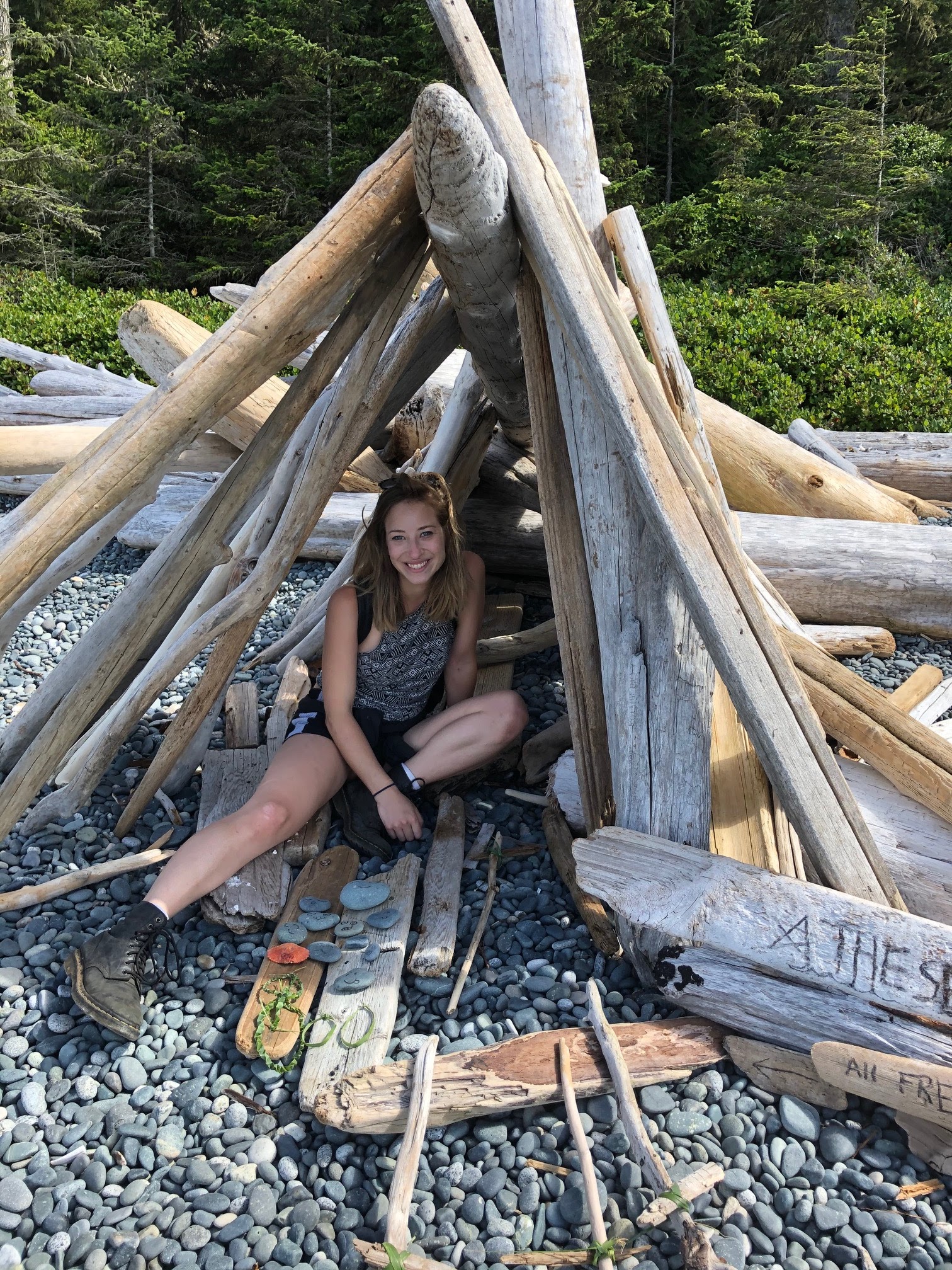
In the summer, the daily new case rate here was down to single digits, so public health relaxed some restrictions. We were able to go on some local camping trips. We especially enjoyed a short camping trip to Malcolm Island with one of my daughters. 

Our original destination was closer to home, but, once the campgrounds were allowed to open, everyone had the same idea and campsites were hard to get. Malcolm Island, near Port McNeill, is one of our favourite places and we had a lovely grassy site just across the road from the ocean. My daughter pitched her tent beside our camper.


Bere Point Hike
Whale-watching Blind


 Trip to the North

Near Lilloett
During the last half of August, we made a trip to northern British Columbia to visit family and friends. We were in our little house on wheels -- our truck and camper.

After spending several days visiting our northern grandchildren and their parents, we continued on to Terrace, a small city in northern BC where we used to live.

Although we didn't see everyone we would have wished, it was so wonderful to connect with a few family and friends.

Ferry Island
Watson Lakes Hike

We also revisited some familiar hikes and river walks. Unfortunately, almost the entire time that we were in the northern part of the province, the weather was rainy and cold.

We left Terrace and spent several days in Smithers, visiting my brothers and celebrating one brother's special day with him and his family. 

Always the intrepid hikers,  we did a mountain hike to Crater Lake, braving rain, wind, and sleet. This was in August!

Crater Lake Hike


Nieces


We returned to Vancouver Island via an overnight ferry from Prince Rupert. Despite the pandemic restrictions, it was still a beautiful trip. We stayed in a nice stateroom with a porthole that framed the view.

Although usually during the summer months, BC Ferries runs a large ferry through the inland passage, because of the reduced number of travellers, we went on a smaller boat this time. For safety, we spent most of the trip either outside, or in our stateroom. The food service on the small ferry was very limited. 

Around Home

In the early part of the summer, I took an all-day introductory kayak course. After that, I began to look in earnest for a secondhand sea kayak. You can read about the results of my search here

Parksville
I continued to do many walks and short hikes in areas nearby. For example, we did countless walks at the Parksville Community Beach, where I snapped this sunset photo one evening with Rob.
Oreo Tarts

Oliver

I tried out some new recipes, including these yummy tarts recommended by Donna at Retirement Reflections. I also have made the winter squash salad described in Donna's blog post -- yummy as well.

We have lavished attention on Oliver, our sole remaining pet. In this photo, he is wearing some jewellery made for him by my grandsons. 

Grandmothering

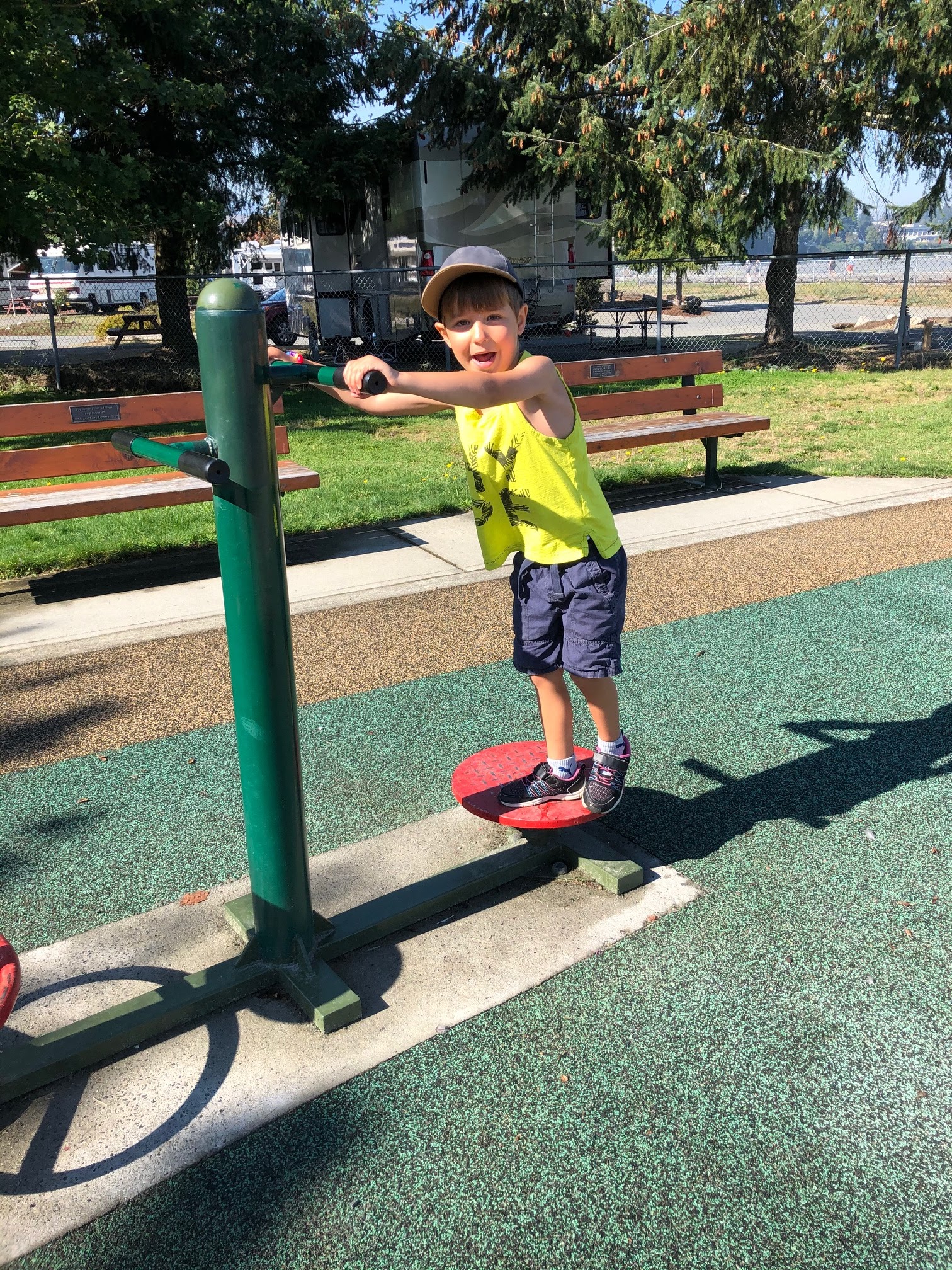
One of the unexpected joys of this pandemic has been spending more time with my two grandsons. Childcare options have been greatly curtailed because of the pandemic restrictions. I have been providing  part-time childcare while my daughter has worked and gone back to school. 
Fall Becomes Winter

As daily cases rose over the fall, more stringent restrictions were put in place again. Because of my child care role, I still see my grandson's family. However, we can no longer see anyone else, except outdoors with physical distancing. 

At Thanksgiving, we met at Neck Point for a family hike, as we couldn't all gather for a big dinner.
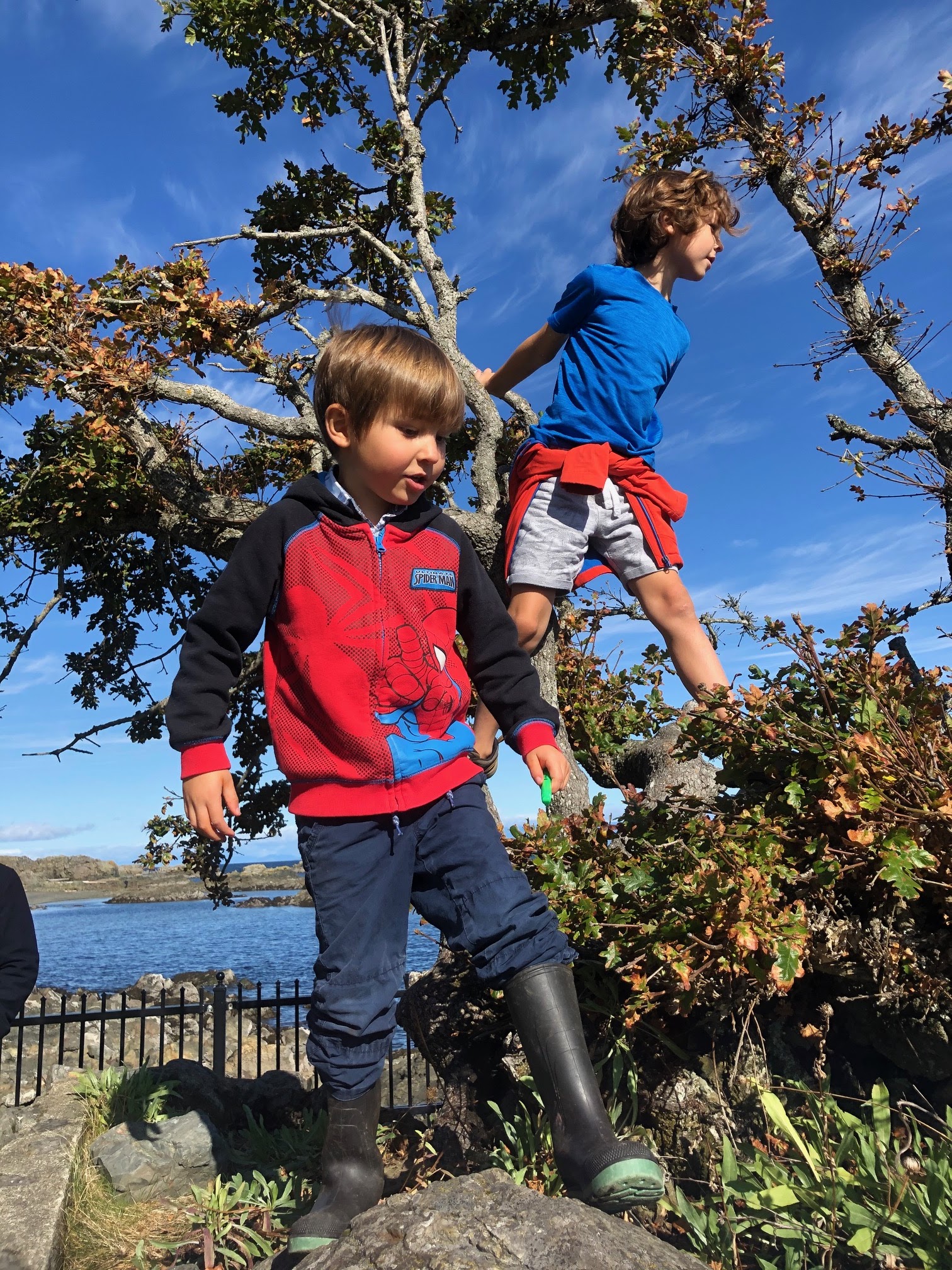
 

We continue to explore trails and shorelines near home. I sometimes meet with friends for physically -distanced hikes and walks. For example, I met up with Deb who blogs at The Widow Badass for a hike to Jack Point recently. 

Deb and Petroglyphs
Rob and I celebrated New Year's Day by hiking the trails at Moorecroft Park. It was rainy, of course.

As I look through my photos and share them with you, one thing becomes very clear. Although it has been an unusual year, and a difficult year, life went on. My life was mostly filled with joy. And that joy took the form of friends, family, and nature. 


Saturday, January 2, 2021

Happy Highlights in a Bleak Year

The Big Picture

There is no doubt that 2020 was a tough year. More than 83 million people worldwide were infected with covid-19 in 2020, and more than 1.8 million have died. Every one of us knows someone who has had the disease, and even if the lives of those close to us were spared, we have heard the tragic stories of so many who have passed away, including, especially, our elders. 

Add to that the extreme wildfires in Australia and California, the explosion in Beirut, the murder of George Floyd, and the stomach-churning in-your-face pandemonium of American politics, and it is clear that 2020 has been a bleak year. 

Of course, there also have been heroes, collaborative efforts, and sweeping changes that have reaffirmed my faith in human nature and science. 

 Thank-you to the physicians, nurses, other health care workers, and long term care home staff who have worked so hard to save lives during this pandemic, even while putting their own health and well-being at risk. 

Thank-you to governments and public health leaders who have made the right choices during the pandemic, whether by quickly allocating funding to workers forced to stay at home, or by making the hard decisions to order unpopular public health restrictions before our hospitals were overwhelmed. I count our public health officer here in BC, Dr. Bonnie Henry, among the heroes of the pandemic.

Thank-you to the essential workers who have made it possible for others of us to stay home. As well, I thank the everyday heroes, my friends and neighbours, who have trusted science and chosen to comply with quarantines, physical-distancing guidelines, and mask wearing to protect themselves and others around them, day after day after day. It has been hard, and will continue to be hard for some months to come. 

Thank-you to the scientists who have pulled out all the stops to develop safe vaccines in record time. This accomplishment has involved a level of international scientific collaboration that is unprecedented. It shows we can work together when we understand the gravity of an problem. Let's hope the same level of dedication and global collaboration will next be applied to the existential problems of climate change and species extinction. 

At a Personal Level

I have been very fortunate in most ways throughout this pandemic, and for that I am deeply grateful. Yet, even so, there have been some sad times, personally, during 2020. Our beloved dog, Kate, died in July. Shortly after, our cat became ill and his health continues to decline. Our retaining wall at the back of our property failed, and repairing it will be difficult and expensive. We've missed being able to spend time with friends and family in person during much of the year. 

Yet, in the grand scheme of things, these are minor and temporary wrinkles. 

Overall, for me 2020 has been a year of much new learning and many happy moments (in spite of the dire pandemic backdrop). I realized Rob and I have had many joyful experiences in 2020 when I looked in my phone to find a few photos to illustrate this blog and ended up choosing 50!

Hawaii


We made a trip to Hawaii in January of the year with Rob's daughter and son-in-law and our two grandchildren. 
 
We had a wonderful time together, and we thank our lucky stars that we travelled when we did, before the Sars2 corona virus had begun to spread widely. 
Under the Banyan Tree


We loved spending time with the grandkids.
Bamboo


The island of Maui is beautiful. I found the varied topography fascinating, from the beach, to the tropical rain forest, to the top of the Haleakala volcano.


We were in full tourist mode in Maui, and we saw a lot.

While we were there, we began hearing on the news about a new and lethal virus spreading throughout China. Like so many other North Americans, we hadn't yet realized that we were on the verge of a worldwide pandemic.
Playing with Trucks on top of Haleakala

 In the meantime, we hiked, snorkeled, swam, kayaked, and went out on boat cruises. We marvelled at the sea life at the aquarium, and swam with turtles. 

We had a condo with a kitchen, so we breakfasted at the condo, and then usually made a picnic to take along on our day trips.  

Most evenings, we enjoyed trying out the various restaurants on Maui.

I have been to Maui before, but it was many years ago. So I was intrigued to revisit places I remembered from that trip.

We were lucky to have fabulous weather while we were there. Many evenings, we walked through the parks admiring the sunset. I have dozens of sunset photos, but I decided to only include the one. 

Our trip to Maui was the last foreign travel we will do for a long time. 


Enjoying the Outdoors on Vancouver Island

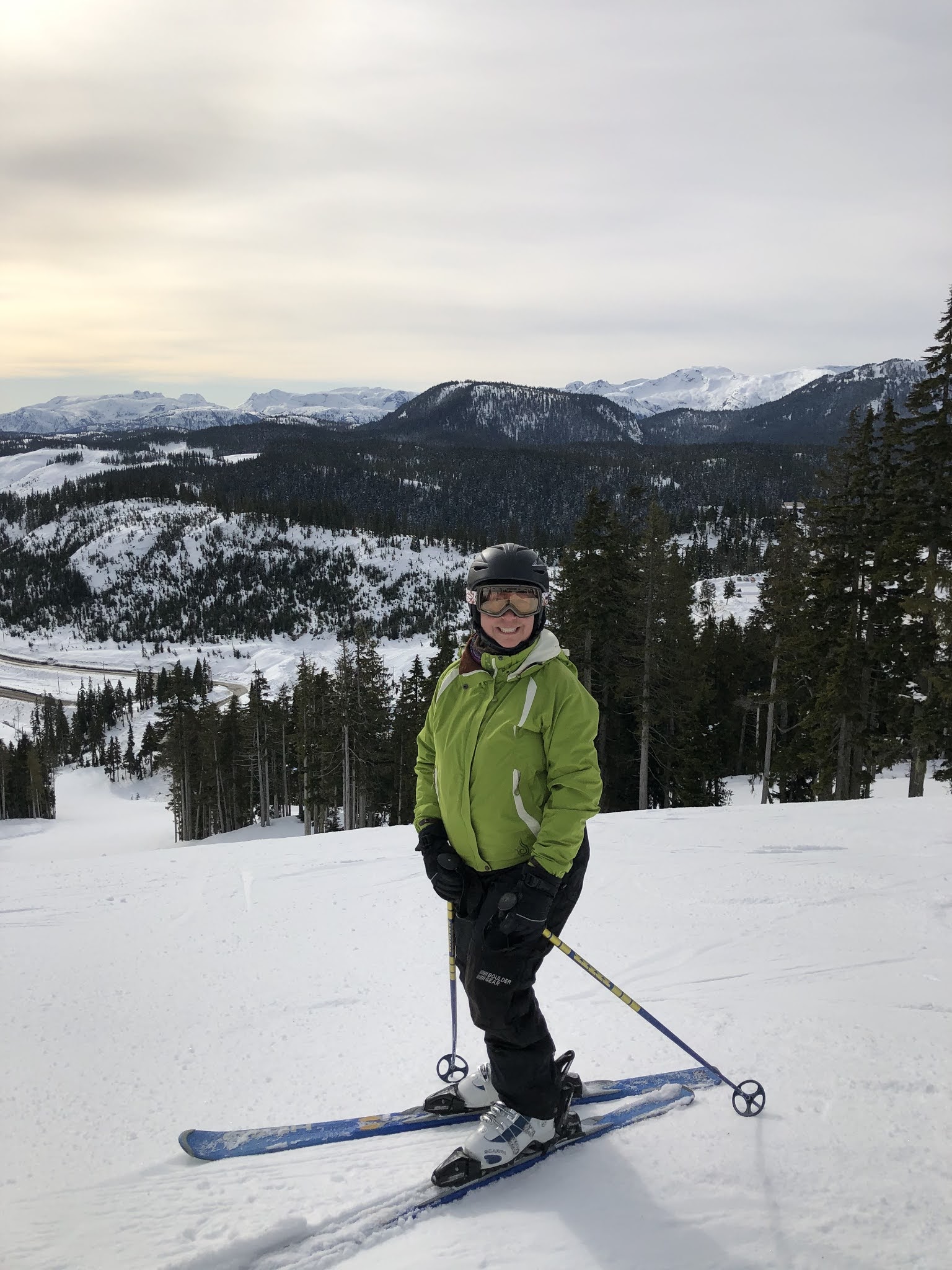
Back home in Canada, we had a wonderful time skiing at our local ski hill during February and the first half of March. In fact, we had the skis packed in the truck and were about to leave to drive to the ski hill on the day everything closed down in BC in mid-March.

We checked the website one last time before we left (it's a 75 minute drive), and found out that the ski hill was closed because of covid-19 restrictions.


We live on beautiful Vancouver Island, so we switched to other outdoor activities.


In the initial six weeks of the pandemic restrictions, everyone was encouraged to stay home and only to go out among people as little as possible. However, outdoor activities were allowed, as long as we employed physical distancing. 

We are fortunate to live in a semi-rural area, where there are lots of trails through the forest and along the ocean shore. 

 As it became safe to do so, we began to meet up with friends and my adult kids for hikes and picnics. 

Hiking with my Son

 I realized that for me, not seeing my kids and grandkids throughout the spring months has been the most difficult period of the pandemic so far.

Hiking with my Daughter


 Although we talked on the phone and used videoconferencing, it was not like being together in person. 

In the summer months, the numbers of daily new cases in BC were in the single digits. So many of the earlier restrictions were lifted.


I helped my daughter out providing part-time childcare while she worked. I loved having "Grandma time" with the two boys!

So, although it was a terrible year in many ways, for me, the first six months of 2020 also had many happy highlights. During this pandemic, I have learned that being able to spend time with those I love, and also spending time in nature are things that allow me to find joy even in difficult times. 


Tuesday, December 8, 2020

Author Interview: Gail Madjzoub

Author Gail Madjzoub

Today, I am delighted to bring you an interview with the author, Gail Madjzoub. Gail is currently based on Vancouver Island in British Columbia, Canada, but she has spent her life living all over the world.  

Gail is a member of my writers' group. I had the opportunity to serve as a preliminary reader for her recently published novel, and was very pleased when Gail agreed to do an interview with me for Dr Sock Writes Here.


Jude: 


Your novel, Crimson Ink, spans a period of more than five decades in modern Iran. Tell us, briefly, what the novel is about.


Gail:


After the Islamic Revolution, Fereshteh, a woman doctor and a Baha'i, experiences along with her family and religious brethren far greater than usual persecution for their beliefs; they struggle to survive. Compassion for the countless others who also run afoul of the regime prompt her and her physician husband to treat those emerging from the torment of prison in the ‘80s and again following the chaotic aftermath of the 2009 election. 


Meanwhile, Fereshteh joins forces with others to help women enduring not only the regime’s oppression but also domestic abuse. Her work and her religion become the pretext for her imprisonment and worse. This has unintended consequences for other family members, yet there is resilience and there is hope.


Jude: 


The story is told from several points of view. As a writer, what strategies did you use to provide narrative structure and coherence, given the various points of view and long timeline?


Gail:


To help readers make sense of the large cast of characters from three different Iranian families (all with names unfamiliar to a Western reader), I created family trees, bolding the names of those who are important, especially whose point of view drive the story. At the end I added Glossaries and References.


To manage the long timeline I grouped chapters into “Books” that reflected eras: Pre-Revolution (1955-1978), Revolution (1979-1980), Post-Revolution (1989-1993), “2008”, and Reform (2009-2011). Within these I selected only significant years, months and seasons, showing each family separately but simultaneously up until 2008. Only during the final three years of the narrative do all three become inextricably intertwined; their interaction then drives the plot to its climax and resolution.


Jude: 


One of the themes in the novel that I found very interesting is the complexity of family. Could you talk about that?


Gail:


The main characters come from a large extended family split down their religious lines: a Muslim brother and a Baha'i sister. While the sister’s family embraces everyone, it’s only because of the brother’s love and loyalty to his sister, despite what he considers her religious ‘defection’, that he and his family tolerate hers. Sinister undercurrents, and secrets and betrayals born of fear carry grim consequences for many, some of which emerge only over decades.


In the second family, the one fair-minded son finds he can’t escape his family’s legacy. This and the Revolution tether him to a path that causes him to forget who he is.


The third family produces a son out of squalor, desperation and neglect. His eventual reconnection with his powerful cleric father gives him free reign for his yet undiscovered aberrant proclivities. His dealings with and marriage into the first family, and his professional relationship with the son from the second family complicate all relationships in unforeseen ways. 


Jude: 


Although your story is fictional, it speaks about real political and social events. What challenges did you face in meshing fact and fiction?


Gail:


Historical events created a solid framework for the story and details of these helped fill it in. It was actually easy for me to fit my fictional characters and their personal stories into this. They’re a mix: composites of real people whose stories I knew or read about, and purely fictional ones based on probable personality types likely to be found within such a narrative.


The real challenge was balancing my portrayals of characters and events. I didn’t want to get into the quagmire of politics and known personalities, nor did I want to reduce characters, politics, social justice and religion to simple black and white depiction. All are complex and I saw my task as providing nuance and opposing perspectives without becoming dogmatic. This took a great deal of time. Discussions with early readers helped me in this.


Jude: 


There are many routes to publishing. What approach did you take, and why?


Gail:


I researched all possibilities and had conversations with other writers. Then sat on the fence for a long time. Finally, after forays into the world of query letters, agents and publishers, consideration of the issues with publishing contracts, intellectual property rights, the long timelines, and possible frustrations of being at the mercy of other peoples’ demands and delays, I felt that self-publishing was the only route for this book. It had taken me many years to research, write and edit, and I wanted it to be published on my own terms and timeline.


Jude: 


Are you working on a writing project now? Can you say a few words about it? 


Gail:


 Yes. It’s a sequel to Crimson Ink. I’d thought I was done with the story, but in early 2020 I realised this wasn’t so. In light of current events my characters were agitating and telling me they had more to say. Iran has become increasingly harsh in its treatment of many of its citizens, particularly women and minorities. Social justice questions continue to loom large. In my sequel, at least, I can bring some resolution to a couple of the issues I addressed in Crimson Ink.


Jude: 


What advice do you have for writers, either about writing or publishing?


Gail:


You can write at any age. I’m a late bloomer, having started when I was 50. You simply must have passion and the courage to set words onto a page. And now, many years later I also know that you can learn about and navigate the publishing game. There’s a wealth of information and tools out there. You can learn new technology: how to use writer-specialised software, software for formatting a manuscript, the ins and outs of self-publishing, and social media as a marketing tool. If you want your book published, you will learn how to do it. 😊


Bio: Originally from the American East Coast, I lived & worked for more than 30 years in Europe and Africa & have traveled extensively.  After settling again in North America I began writing.  My professional background includes education, health care, life coaching & facilitation.


To follow Gail’s writing updates click here:

Website: https://www.gailmadjzoub.com

Instagram: Gail Madjzoub  

Facebook:  Gail Madjzoub, Author

Email:  gail@gailmadjzoub.com


The book is available on all Amazon sites.


Monday, November 23, 2020

The Cost of Responsibility

Many years ago, early in my career, I had the opportunity to travel to Quebec City to give a presentation at a conference. I was terrifically excited. I'd never travelled to Quebec City, nor, for that matter, had I visited any parts of Canada east of Saskatchewan. 

The conference was in an area of rehabilitation in which I was developing some unique expertise. I applied to my employer for funding, and they agreed to pay for the the plane ticket, hotel room, registration, and my meals during the weekend of the conference. It was a very good career opportunity. The icing on the cake was that one of my best friends had also had a paper accepted at the same conference, and was planning to attend too. Fun!

I was a new mom at the time, and our baby was about eight months old. The dilemma I faced was how to attend the conference and also look after my daughter. My husband and I decided that we'd go to Quebec City as a family. That way, he could care for her while I was in the conference sessions. 

We also decided we'd both take some vacation time off and stay for a few extra days after the conference. My husband, of course, paid for his own plane ticket and expenses, and the baby flew for free. We rented a B&B for the extra days after the conference. 

The morning that we were to leave to fly to Quebec, my daughter woke up with a red rash on her face. She'd never had anything similar. However, she seemed happy and her behaviour was normal, and she did not have a fever. The spots seemed to be fading a bit, so we made our way to the airport for our flight. 

But I was consumed with anxiety. What if she had something contagious, like measles? Perhaps we'd be putting others on the flight at risk, crammed together in a row of seats for the hours it would take to fly from Vancouver to Quebec City. 

So, after being cleared for our flight when we went through inspection, I pointed out the rash and asked whether they could change our seating assignment so we weren't seated right next to anyone else.

Well, you've never seen airline officials move so fast. They whisked us out of the inspection area and put us into a holding room while they contacted their supervisor. The verdict was that we couldn't board the flight, or any flight, until we had medical clearance to fly. 

As we made our way back home, I felt like a fool. Why had I opened my big mouth? The airport personnel hadn't even noticed the rash until I'd pointed it out. The baby was clearly fine. She was gurgling happily in her car seat.  

It felt like a crisis. At that point in my career, it was inconceivable to not show up to deliver a presentation that I'd promised to give, that was already printed in the program, and that I'd spent many hours preparing. My employer had paid for the conference and flight. Would they have to forfeit the money? Would I have to pay them back? Would we forfeit the cost of my husband's flight and the deposit for the B&B? My husband had cancelled his clients' appointments for the week. We would "waste" precious vacation days. 

After some frantic phone calls, we were able to get in to see a physician that same day. The physician examined my daughter and declared that the rash was nothing serious, perhaps heat rash or a mild food sensitivity. She filled out a medical authorization form and the airline put us on a flight the next morning, by which time the rash had totally disappeared. 

With friend & daughter; Chateau Frontenac
 We arrived in time for me to attend the opening reception of the conference. The entire conference was excellent, and we had a wonderful time in Quebec City. We happened to be there at the time of lobster fest so we ate a great deal of yummy lobster. 

Strolling Around Quebec City
 For a long time, I thought the lessons that I had learned from this experience were:

  • Don't create problems for yourself by pointing out minor issues that the authorities otherwise wouldn't notice
  • Something that seems like a huge crisis in the moment often turns out to be a minor bump in the road
  • Always leave some extra time before and after a scheduled event when travelling, in case of unexpected delays.

But through our collective experiences during this worldwide epidemic that has been dragging on and on, I suddenly remembered this long-ago experience and realized that I learned something else, too. 

Because what if my daughter's rash had NOT been a temporary, minor occurrence? What if it had been been measles or chickenpox or some other very contagious disease, and by going on the flight we exposed someone else -- perhaps an expectant mother or an elderly person -- to an illness that could cause disability or death? My desire to attend a conference and to tour Quebec City would have seemed like trivial reasons to have put others at such grievous risk. 

There can be costs for making the responsible choice. 

But sometimes the costs of making an irresponsible choice can be ever so much higher. 

Wednesday, November 18, 2020

Procrastination Kickstart


The Beauty of Nature Inspires Me
Have you ever had a big project that you keep putting off, day after day, week after week? 

No matter how much you mentally flog yourself, you can't get started. You find an endless number of other things that suddenly need to be done instead, and manage to put off starting the big project this morning, and this afternoon, and this week. The stress builds, and the lack of progress starts to feel like a crisis. You don't feel good about yourself.

Procrastination is something that I struggled with during my career. I was fortunate to have work that was very self-directed. I had a lot of choice in what projects I chose to take on, and the freedom to structure my work-time as I chose, as long as the work got done. For the most part, I thrived with this much independence. But the downside of all that freedom was that procrastination could strike, and there was no one to tell me what to do and make sure I did it. I remember some projects that "fell off the side of the desk," and I regret to this day that I procrastinated and never finished them (or sometimes, never even started them).

Of course, now that I'm retired, there's way less stress. But I still find there are certain things in life that I procrastinate on. One of the good things about my lifelong struggle with procrastination is that I've learned some strategies to address it. Here are some of them.

Am I procrastinating?

The first thing to do is to notice that I am procrastinating in the first place. 

I am a master of convincing myself that the reason I am not doing the project is because I am too busy, or because something else urgent has to be done first. I have to go out to get my daily exercise, or I have to clean the kitchen, or today is a perfect day to re-pot all the houseplants, or, etc., etc. If I keep myself in a whirl of busyness, I can justify to myself why I can't possibly start the project right now.

A variation on this is, I am so tired or overworked (because I've been so busy!) that I need to rest or do something fun and rejuvenating first. And the days go by. 

I Distract Myself by Going for Walks
And then something will pull me up short -- perhaps someone else has completed something similar to my project -- and I suddenly ask myself: "Wait! Why haven't I done MY project yet?" Or I start feeling really grumpy and annoyed with myself and I don't know why. 

If I stop and think about it, I realize I've been procrastinating.

What is the nature of the project?

Once I notice I've been procrastinating, it's time to figure out why. It turns out that I procrastinate on different things for different reasons.

There are things I have to do and things I want to do. There are things that are important, and things that are not very important.  

For example, I belong to a lot of different community groups. Often, in the excitement of the moment, I volunteer to do something, and then later find myself procrastinating and not wanting to do the thing I said I'd do. I feel as though I "have" to do it because I said I would. 

Strategies: Sometimes, the task is ill-defined or not super important, and just by having a conversation with someone, we decide to go a different route, and I'm off the hook. Sometimes it can be delegated. Sometimes, I simply buckle down and do it while making a promise to myself to not say "yes" so quickly next time when a volunteer is needed for that type of task. Externally imposed deadlines can be really helpful (e.g., it needs to be done by the next meeting). Often, once I make myself do it the first time, it becomes much easier subsequently. Little regular tasks are more likely to get done if I put them into a routine.

There are some things that are unpleasant but very important. These are things you HAVE to do, but really don't want to. An example is having a medical procedure that is necessary for quality of life. Helpful friends who have had a similar procedure can take some of the uncertainty away by talking you through it, making it easier to take action. Support groups or websites or fellow bloggers can be great resources, providing information and encouragement. 

When I discover myself procrastinating about things that I WANT to do, figuring out why I am procrastinating can be a lot more perplexing. 

Do I know how to do it?

Sometimes, I procrastinate because I don't know how to do something. The project can feel too big and overwhelming. The two most helpful strategies for me, in this case, are to research the topic area and to make a plan. Once I gather information about what needs to be done, and ways other people have done it, the project becomes less intimidating. With the information about what needs to be done, I can then sit down and make a plan. 

For a big project, I like to write my plan out. I break it down into specific goals and sub-goals, and list a number of very small, easy steps under each goal. Once I've broken it down into extremely small steps, it is much easier to begin. The whole project might be big, but I know I can figure out how to do each tiny step, one by one. 

What is the fear that keeps me from starting?

Very often, the root of procrastination is psychological. There is a deep-seated fear that your intended project, for some reason, triggers. Perhaps you're terrified of public speaking, and you know that once you've completed your project, you'll have to present it to others. So you don't even start, as a way of avoiding that scary future situation. 

In my case, very often my fears are related to perfectionism and fear of failure. Maybe my project won't be successful. Maybe what I produce won't be "good enough." It will fall short of perfect and reveal that I am a flawed human being.

When I finally zero in on the underlying fear, I can take some of the power out of that fear. Recognizing the nature of the fear helps to get me unstuck.

I can give myself a pep talk, reminding myself of other things I accomplished in spite of being afraid.

I can remind myself that no one really cares about my project but me, or how "perfect" it is. I can remind myself that it's not either/or: fail vs. perfect. There are a lot of gradations in-between. It is the journey that counts, not only the product at the end

Nature's Glory puts Fears in Perspective
The value of examining procrastination

Ultimately, personal projects and goals we set for ourselves (as opposed to those things we say we'll do to please others) are deeply important to who we are as people and what's important in our lives. If we wiggle out of doing things that are essential to our core values or stepping stones toward our life purpose(s), it is a sad personal loss, and sad for others, too, who'll never benefit from our gifts.  

Examining the causes of procrastination can get us unstuck and help us learn about ourselves. The things that seem hardest are often our best learning opportunities, and procrastination can be a signal that we are approaching one of those moments of transformation. 

So, what kind of project is it, you ask, that leads me to reflect on procrastination? I have needed a procrastination kickstart because I am seeking to publish my novel, and am starting to embark on that publication process.

Sunday, October 25, 2020

Pumpkin Season

Autumn is my favourite season. (Although, I have to admit, I also love Winter, Spring, and Summer.) But yesterday when I woke up, the rain was pounding down and the wind was howling. There was fresh snow on the mountain tops. I thought twice about loving Fall. 

 But then I put on my rain clothes and went out for a nice long walk, which included a stop at the Little Free Library in my neighbourhood. I picked up new Kate Quinn novel, and tucked it inside my raincoat to keep it dry. I admired the Halloween decorations at various houses. And I was back to loving Fall.

Today the sun shone gloriously all day long. The leaves are multi-coloured, a perfect Fall day. Our back garden is a vision to behold on a day like this.

I went to a local pumpkin patch with my daughter, son-in-law, and two grandsons.

We each chose a pumpkin to take home.  Later, I went for a walk on the forest trails near my home.


The tree frogs are very noisy along the trails at this time of year. I paused to look for a frog that was croaking right beside my toe. But they are very good at camouflage. Although I stood there for several minutes looking for it, I could not spot it.

A couple of days ago, I climbed up Notch Hill, and the views were spectacular. The arbutus trees were covered with red berries, which made them look very festive.

Yes, it's settled. I love sunny Autumn days. Rainy ones are fine, too. They're great for rain walks, reading in front of the fireplace, writing, and baking pies. 


In the last couple of weeks, I've baked two pies -- a pumpkin pie for Thanksgiving, and an apple pie this week. Rob is happy. Isn't retirement grand?